Carbon Dioxide → 2,2,6,6-Tetramethyl-4-(chlorocarbonyloxy)piperidinium chloride
Reaction equation

C(=O)=O.Cl.[CH3:5][C:6]1([CH3:15])[CH2:11][CH:10]([OH:12])[CH2:9][C:8]([CH3:14])([CH3:13])[NH:7]1.[C:16]([Cl:19])([Cl:18])=[O:17].N1C=CC=CC=1.[Cl-].CC1(C)CCCC[N+]1(C)C.Cl.[NH+]1C=CC=CC=1>CC(=O)CC>[Cl-:18].[CH3:5][C:6]1([CH3:15])[CH2:11][CH:10]([O:12][C:16]([Cl:19])=[O:17])[CH2:9][C:8]([CH3:14])([CH3:13])[NH2+:7]1Participants
Reactant 6




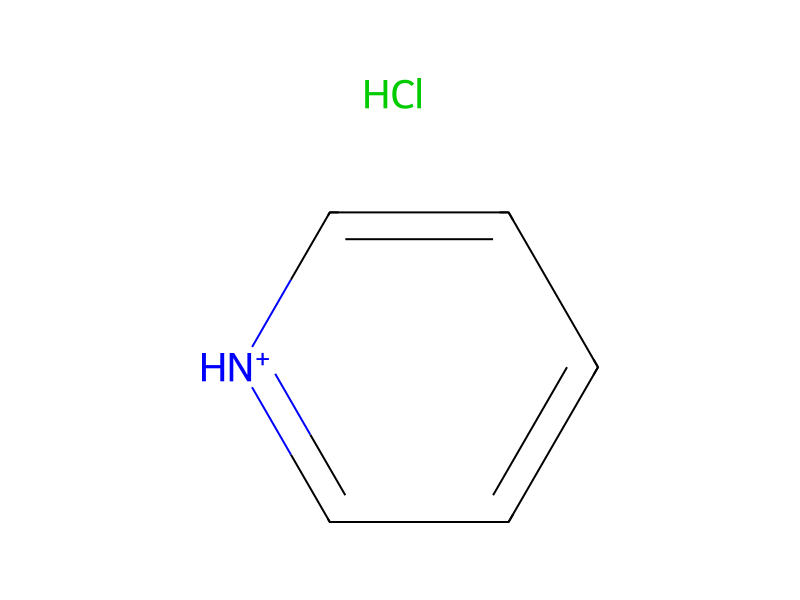

Product 1

Reagents, catalysts & solvents 1

Conditions
- Temperature
- 80 °C
Procedure
Into a 500 ml flask equipped with a magnetic stirbar, thermometer, gas inlet adapter, dual condensers (i.e., Dry Ice condenser atop a water cooled condenser), and oil bath were placed 28.2 g (0.145 mole) of 2,2,6,6-tetramethyl-4-piperidinol hydrochloride and 250 ml of 2-butanone. The mixture was heated to reflux and 8.0 ml (0.11 mole) of condensed phosgene was allowed to evaporate into the reaction mixture cooling the mass to 73°-75° C. This was followed by pipet addition of 11.5 g (0.145 mole) of pyridine which caused an exothermic reaction raising the temperature to 80° C. An additional 10 ml (0.14 mole) of phosgene were evaporated into the system. During this time the reaction mixture cleared of initially suspended solid and then formed a precipitate. After the addition of phosgene was completed, nitrogen was bubbled into the system for 40 minutes under continued reflux. The mixture was then allowed to cool gradually overnight and then was cooled further in an ice water bath. The very hygroscopic solid was collected by filtration. The liquid was reduced to 50 ml volume by distillation at atmospheric pressure, cooled to ambient, and diluted with 100 ml of tetrahydrofuran. In this manner, more solids were obtained and isolated by filtration. The combined solids were then freed from residual solvent under high vacuum. The product was a mixture of the tetramethylpiperidinium chloride compound and pyridinium hydrochloride. This mixture was used in the next step without further purification.
Workup
- customInto a 500 ml flask equipped with a magnetic stirbar
- temperatureThe mixture was heated
- temperatureto reflux
- customto evaporate into the reaction mixture
- temperaturecooling the mass to 73°-75° C
- customan exothermic reaction
- customformed a precipitate
- customnitrogen was bubbled into the system for 40 minutes under continued reflux
- temperatureto cool gradually overnight
- temperaturewas cooled further in an ice water bath
- filtrationThe very hygroscopic solid was collected by filtration
- distillationThe liquid was reduced to 50 ml volume by distillation at atmospheric pressure
- temperaturecooled
- additiondiluted with 100 ml of tetrahydrofuran
- customIn this manner, more solids were obtained
- customisolated by filtration
- customThis mixture was used in the next step without further purification
Sources & evidence
- ORD record
- ord-c4a829849c6a4aa3bcf051f1822582c0
- Source dataset
- uspto-grants-1990_05
- Patent number
- US04925903
Reaction notes
Loading…