Hydrochloric Acid → 1,6-anhydro-beta-D-altropyranose
Reaction equation

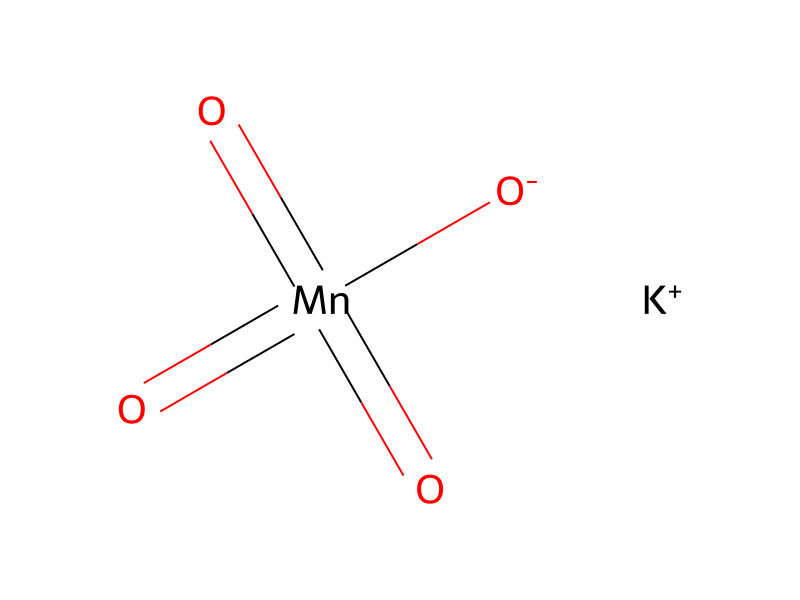
[C@@H:1]12[O:9][CH2:8][C@@H:6]([O:7]1)[CH:5]=[CH:4][C@@H:2]2[OH:3].[OH-:10].[Na+].[Mn]([O-])(=O)(=O)=O.[K+].Cl.[OH2:19]>>[C@@H:1]12[O:9][CH2:8][C@@H:6]([O:7]1)[C@@H:5]([OH:19])[C@@H:4]([OH:10])[C@@H:2]2[OH:3]Participants





Procedure
128 mg (1.00 mmol ) of the compound (2) obtained in step a) of Example 1 was dissolved in 2.0 ml of water, followed by adding 16.0 ml of a 0.6% aqueous solution of sodium hydroxide to the resultant solution. Further, 190 mg (1.20 mmol) of potassium permanganate was added bit by bit to the solution while stirring the solution at room temperature. The resultant solution was kept stirred at room temperature for 20 minutes, followed by adding dropwise bit by bit a 1N hydrochloric acid to the solution so as to neutralize the solution. Then, 10 the insoluble components were removed by filtration, followed by removing the solvent by distilling the filtrate under reduced pressure. Further, the residue was refined by means of a silica gel column chromatograph so as to obtain 53 mg of 1,6-anhydro-β-D-altropyranose (D-altrosan; compound 3). A mixed solvent consisting of methylene chloride and acetone was used as an eluent for the column chromatograph. The mixing ratio of methylene chloride to acetone fell within a range of between 1:2 and 1:4. The yield of the compound (3) was 32.7%. Further, the 13C-NMR spectrum of the formed product was as follows, which were equal to those of the compound (3) obtained in step b) of Example 1:
Workup
- customThen, 10 the insoluble components were removed by filtration
- customby removing the solvent
- distillationby distilling the filtrate under reduced pressure
Sources & evidence
- ORD record
- ord-3ed0ae8f769f4147999fdadccaf671ee
- Source dataset
- uspto-grants-1995_04
- Patent number
- US05410038
Reaction notes
Loading…