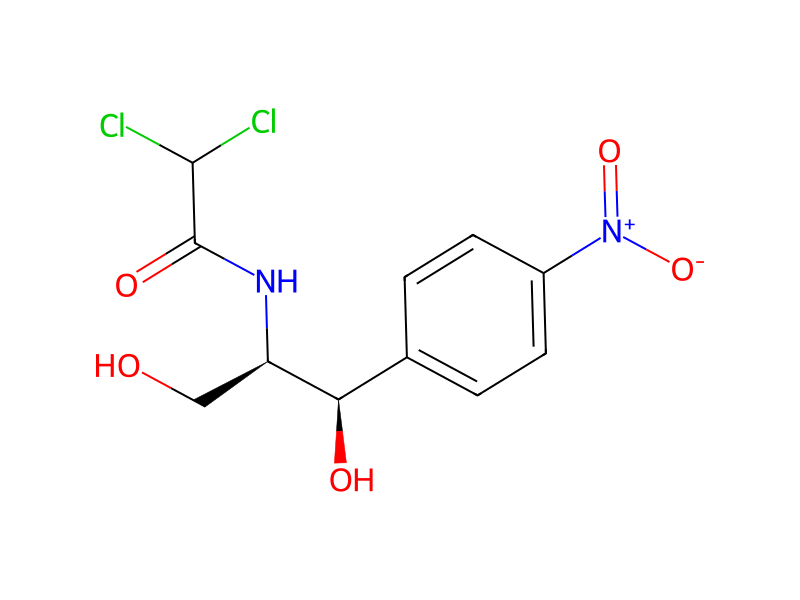
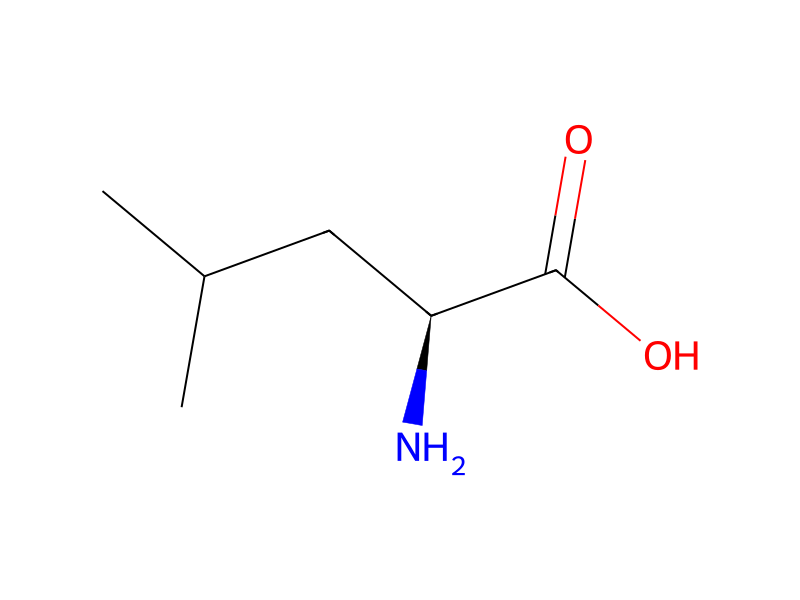
Chloramphenicol → L-Leucine
Reaction equation

[CH:1]1[C:6]([C@@H:7](O)[C@H:8]([NH:11]C(C(Cl)Cl)=O)[CH2:9][OH:10])=[CH:5]C=C([N+]([O-])=O)C=1.CC[C@H]1OC(=O)[C@H](C)[C@@H](O[C@@H]2O[C@@H](C)[C@H](O)[C@@](OC)(C)C2)[C@H](C)[C@@H](O[C@@H]2O[C@H](C)C[C@H](N(C)C)[C@H]2O)[C@@](O)(C)C[C@@H](C)C(=[O:28])[C@H](C)[C@@H](O)[C@@]1(O)C.C[C@]1(O)[C@@H]2C(=C(O)[C@]3(O)C(=O)C(C(N)=O)=C(O)[C@@H](N(C)C)[C@@H]3C2)C(=O)C2C(O)=CC=CC1=2>>[NH2:11][C@H:8]([C:9]([OH:10])=[O:28])[CH2:7][CH:6]([CH3:5])[CH3:1]Participants


Procedure
Table 3 shows the enzymatic formation of pepstatins from L-leucine and other reactants. In this experiment a medium containing 1.0% glucose, 1.0% starch, 0.75% polypeptone, 0.75% Ehrlich meat extracts, 0.3% NaCl, 0.01% MgSO4.7H2O, 0.1% KH2PO4 and 0.1% metal ions solution (the same composition as described in Experiment 1), pH 7.2, was prepared and sterilized at 120° for 15 min. A pepstatin-producing strain Streptomyces testaceus MC144-Cl (ATCC 21469) was added to a 50 ml portion of the medium in a 500 ml flask. The flask was shaken on a rotary shaker (220 r.p.m.) at 28° for 48 hrs. The cells were harvested, washed with cold sterile water three times, and suspended in M/15 phosphate buffer solution, pH 7.0. 100ml flasks containing 20ml of a reaction mixture consisting of L-leucine and other reactants as indicated in Table 3, the cell suspension (final concentration = 10mg/ml as dry matter), and 10 mcg/ml of chloroamphenicol were shaken on a rotary shaker at 28° for 20 hrs. Chloramphenicol is added to prevent contamination and growth of the cells during the reaction because the strains employed in these experiments were sensitive to antibiotics such as chloramphenicol, erythromycin or tetracyclin. The results shown in Table 3 indicate that significant amounts of pepstatins were formed by the aerobic reaction of L-leucine and the cells, and that the amounts of the product were increased by the addition of amino acids such as L-valine, L-lysine, L-aspartic acid, or L-alanine, of sugars such as glucose, of organic acids such as malic acid, or of alcohols such as glycerine. Similar results (Table 4) were obtained when the reaction was carried out with the organic acids related to the Krebs cycle such as citric acid, succinic acid, pyruvic acid, glutamic acid, or alpha-ketoglutaric acid in place of malic acid in the present experiment; the glucose could also be replaced by sucrose, invert sugar, molasses, or starch hydrolysate.
Workup
- additionwas added to a 50 ml portion of the medium in a 500 ml flask
- washwashed with cold sterile water three times
- addition100ml flasks containing 20ml of a reaction mixture
- dry with materialthe cell suspension (final concentration = 10mg/ml as dry matter), and 10 mcg/ml of chloroamphenicol
- stirringwere shaken on a rotary shaker at 28° for 20 hrs
- additionChloramphenicol is added
- customduring the reaction because the strains
Sources & evidence
- ORD record
- ord-8900bde122d640adb3d44ae3f1e25479
- Source dataset
- uspto-grants-1976_06
- Patent number
- US03963579
Reaction notes
Loading…