Benzene → 2-(N-alpha-bromopropionyl-2,3,6-trimethylanilino)acetaldehyde
Reaction equation

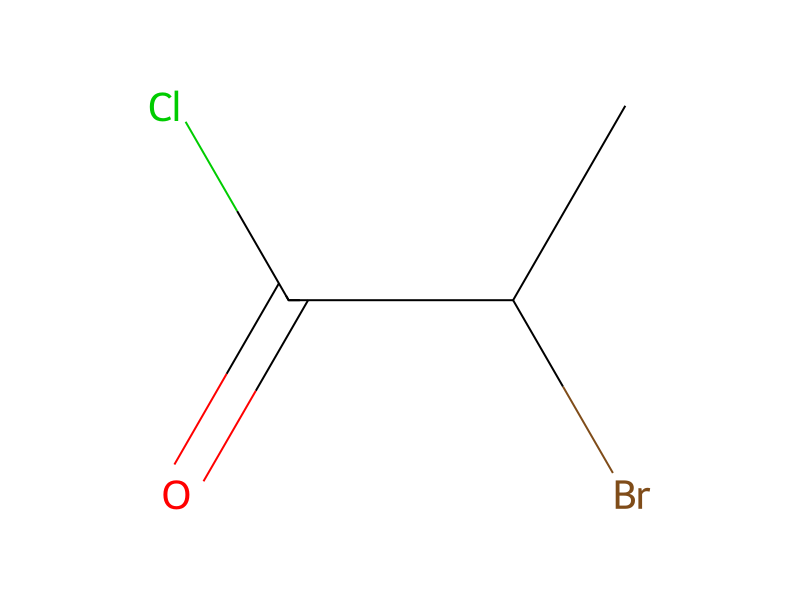
[CH3:1][C:2]1[C:11]([CH3:12])=[CH:10][CH:9]=[C:8]([CH3:13])[C:3]=1[NH:4][CH2:5][CH:6]=[O:7].C(=O)([O-])[O-].[Na+].[Na+].C1C=CC=CC=1.[Br:26][CH:27]([CH3:31])[C:28](Cl)=[O:29]>O>[Br:26][CH:27]([CH3:31])[C:28]([N:4]([CH2:5][CH:6]=[O:7])[C:3]1[C:8]([CH3:13])=[CH:9][CH:10]=[C:11]([CH3:12])[C:2]=1[CH3:1])=[O:29]Participants
6





Procedure
The dimethyl acetal of 2-(2,3,6-trimethylanilino)-acetaldehyde (0.1 mole), sodium carbonate (0.06 mole) dissolved in water (50 ml) and benzene (50 ml) are charged into a glass reaction vessel equipped with a mechanical stirrer, thermometer and cooling means. The mixture is cooled to a temperature of about 0°C and α-bromopropionyl cloride (0.11 mole) is incrementally added with stirring. After addition is is competed stirring is continued and the reaction mixture is permitted to warm to room temperature. After this time the mixture is filtered, washed with dilute hydrochloric acid and stripped of solvent to yield the desired product the dimethyl acetal of 2-(N-α-bromopropionyl-2,3,6-trimethylanilino)acetaldehyde.
Workup
- customequipped with a mechanical stirrer
- temperaturethermometer and cooling means
- additionis incrementally added
- additionAfter addition
- stirringis is competed stirring
- filtrationAfter this time the mixture is filtered
- washwashed with dilute hydrochloric acid
Sources & evidence
- ORD record
- ord-269f5095c05e4ddba79a5b2319ee2b1b
- Source dataset
- uspto-grants-1976_06
- Patent number
- US03966811
Reaction notes
Loading…