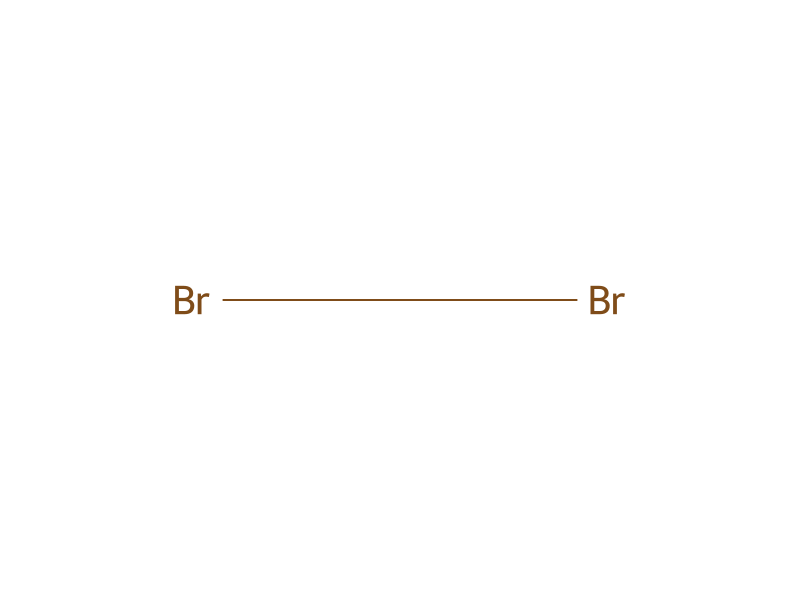
Bromine → 6-(4-pyridinyl)-3(2H)-pyridazinone hydrate
Reaction equation

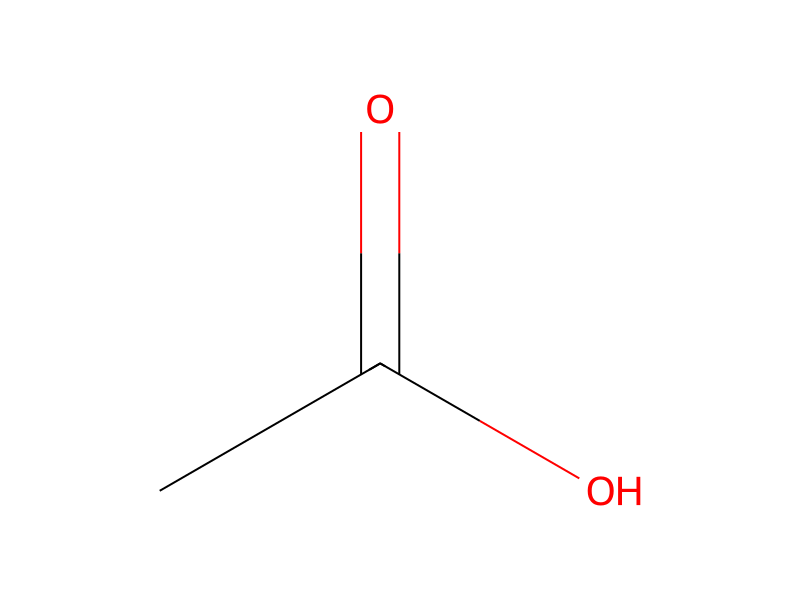
N1C=CC(C2C=CC(=[O:13])NN=2)=CC=1.[N:14]1[CH:19]=[CH:18][C:17]([C:20]2[CH2:21][CH2:22][C:23](=[O:26])[NH:24][N:25]=2)=[CH:16][CH:15]=1.BrBr>C(O)(=O)C>[OH2:13].[N:14]1[CH:19]=[CH:18][C:17]([C:20]2[CH:21]=[CH:22][C:23](=[O:26])[NH:24][N:25]=2)=[CH:16][CH:15]=1Participants


Procedure
B-11. 6-(4-Pyridinyl)-3(2H)-pyridazinone--A 2 liter 3-necked round bottom flask was equipped with a mechanical stirrer, a reflux condenser and a dropping funnel. Into the flask was placed 750 ml. of acetic acid and 16.3 g. of 4,5-dihydro-6-(4-pyridinyl)-3(2H)-pyridazinone. The mixture was heated on a steam bath for about 20 minutes and then a solution containing 50 ml. of bromine and 150 ml. of acetic acid was initially added dropwise. The first 50 ml. of solution was added over a period of about 20 minutes whereupon solid began precipitating. The rest of the bromine solution was then added all at once followed by the addition of 60 ml. more of bromine. Most of the solid redissolved and the resulting mixture was heated with stirring on a steam bath for 6 hours and then allowed to stand at room temperature over the weekend (about 65 hours). A small amount of crystalline solid was filtered off and the filtrate was heated in vacuo to remove the solvent. The remaining residue was treated with 500 ml. of boiling water whereupon most of the residue dissolved. Sodium bisulfite was added to the hot mixture until bubbling of sulphur dioxide ceased. The mixture was made weakly basic to litmus paper by adding sodium bicarbonate. The solid that separated was collected, recrystallized from isopropyl alcohol and dried in a vacuum oven over P2O5 at 45° C. for seventeen hours to produce 6.0 g of 6-(4-pyridinyl)-3(2H)-pyridazinone hydrate (6:1), m.p. 222°-224° C.
Workup
- temperatureThe mixture was heated on a steam bath for about 20 minutes
- additiona solution containing 50 ml
- additionof solution was added over a period of about 20 minutes whereupon solid
- custombegan precipitating
- additionThe rest of the bromine solution was then added
- additionall at once followed by the addition of 60 ml
- dissolutionMost of the solid redissolved
- temperaturethe resulting mixture was heated
- customto stand at room temperature over the weekend (about 65 hours)
- filtrationA small amount of crystalline solid was filtered off
- temperaturethe filtrate was heated in vacuo
- customto remove the solvent
- additionThe remaining residue was treated with 500 ml
- dissolutionof boiling water whereupon most of the residue dissolved
- additionSodium bisulfite was added to the hot mixture
- customuntil bubbling of sulphur dioxide
- additionby adding sodium bicarbonate
- customThe solid that separated
- customwas collected
- customrecrystallized from isopropyl alcohol
- dry with materialdried in a vacuum oven over P2O5 at 45° C. for seventeen hours
Sources & evidence
- ORD record
- ord-a44c610f0c0f4a839ad2a8458da185d6
- Source dataset
- uspto-grants-1981_12
- Patent number
- US04304777
Reaction notes
Loading…