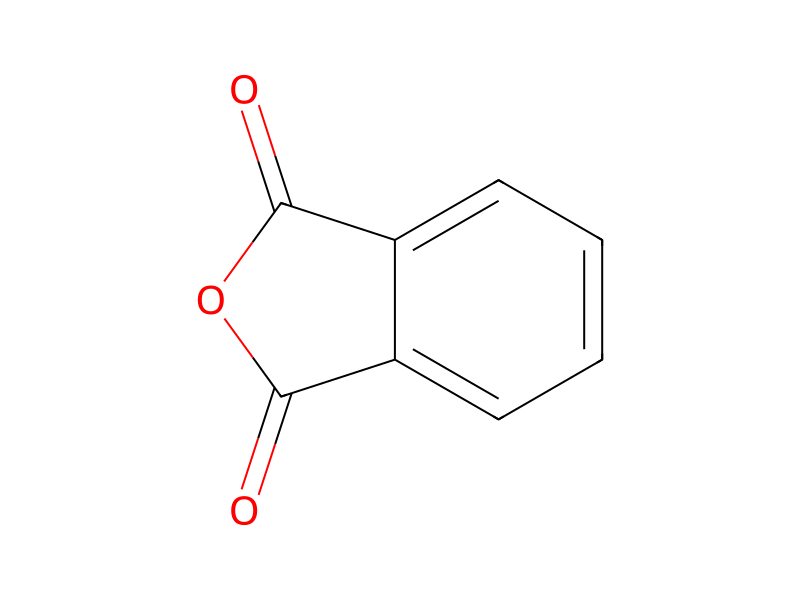
Phthalic Anhydride → HCID 58215795, compound
Reaction equation

[NH2:1][C:2]1[CH:3]=[N:4][CH:5]=[C:6]([Br:8])[CH:7]=1.[C:9]1(=O)[O:14][C:12](=[O:13])[C:11]2=[CH:15][CH:16]=[CH:17][CH:18]=[C:10]12>C(O)(=O)C>[Br:8][C:6]1[CH:7]=[C:2]([N:1]2[C:12](=[O:13])[C:11]3[C:10](=[CH:18][CH:17]=[CH:16][CH:15]=3)[C:9]2=[O:14])[CH:3]=[N:4][CH:5]=1Participants
4
Reactant 2

Product 1

Reagents, catalysts & solvents 1

Procedure
A flask is charged with 3-amino-5-bromo pyridine (1.00 g, 5.78 mmol), phthalic anhydride (0.856 g, 5.78 mmol) and acetic acid (20 mL). The reaction is refluxed overnight. The reaction is then cooled to room temperature and concentrated in vacuo. The crude is dissolved in ethyl acetate and washed with water once. The organic layer is dried over sodium sulfate and concentrated in vacuo to afford 2-(5-bromo-pyridin-3-yl)-isoindole-1,3-dione. MS (ESI) m/z 305.1 (M+H)+
Workup
- temperatureThe reaction is refluxed overnight
- concentrationconcentrated in vacuo
- dissolutionThe crude is dissolved in ethyl acetate
- washwashed with water once
- dry with materialThe organic layer is dried over sodium sulfate
- concentrationconcentrated in vacuo
Sources & evidence
- ORD record
- ord-7ef0e02e48774d90bde89d469f4ffa00
- Source dataset
- uspto-grants-2011_10
- Patent number
- US08030334B2
Reaction notes
Loading…