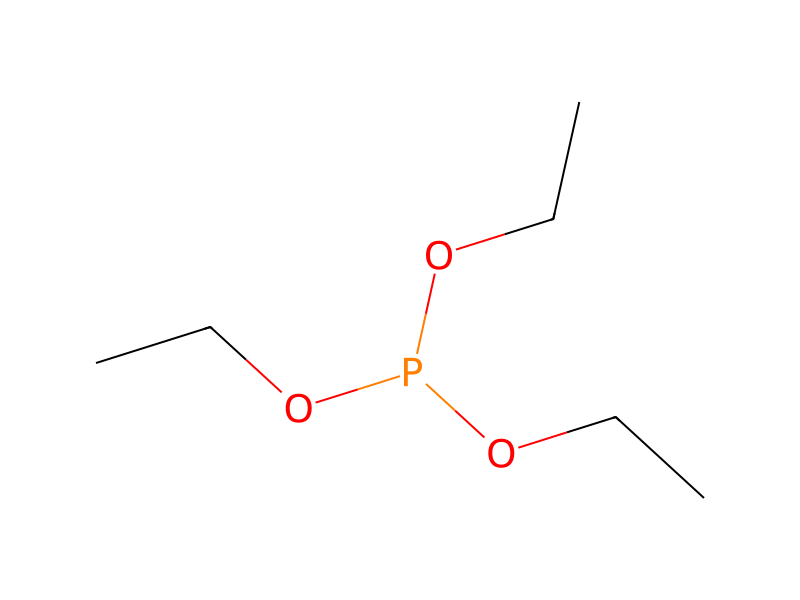
Triethyl phosphite → HCID 86623903, compound
Reaction equation

Cl[CH2:2][C:3]1[CH:8]=[CH:7][CH:6]=[C:5]([O:9][C:10]2[CH:15]=[CH:14][C:13]([C:16]([F:19])([F:18])[F:17])=[CH:12][CH:11]=2)[CH:4]=1.[CH2:20]([O:22][P:23]([O:27]CC)[O:24][CH2:25][CH3:26])[CH3:21]>>[F:17][C:16]([F:19])([F:18])[C:13]1[CH:14]=[CH:15][C:10]([O:9][C:5]2[CH:4]=[C:3]([CH:8]=[CH:7][CH:6]=2)[CH2:2][P:23](=[O:27])([O:24][CH2:25][CH3:26])[O:22][CH2:20][CH3:21])=[CH:11][CH:12]=1Participants
3


Conditions
- Temperature
- 150 °C
Procedure
1-(Chloromethyl)-3-(4-(trifluoromethyl)phenoxy)benzene (1.3 g, 4.5 mmol) was treated neat with triethylphosphite (1.2 mL, 6.8 mmol) and heated to 150° C. After 16 h, the reaction mixture was cooled to room temperature and concentrated to give a residue. The residue was purified by silica gel chromatography (0-30%, EtOAc:CH2Cl2) to afford the title compound (1.76 g) as a clear oil.
Workup
- temperaturethe reaction mixture was cooled to room temperature
- concentrationconcentrated
- customto give a residue
- customThe residue was purified by silica gel chromatography (0-30%, EtOAc:CH2Cl2)
Sources & evidence
- ORD record
- ord-8324dface6ce47c1828c237bef3906eb
- Source dataset
- uspto-grants-2011_10
- Patent number
- US08044052B2
Reaction notes
Loading…