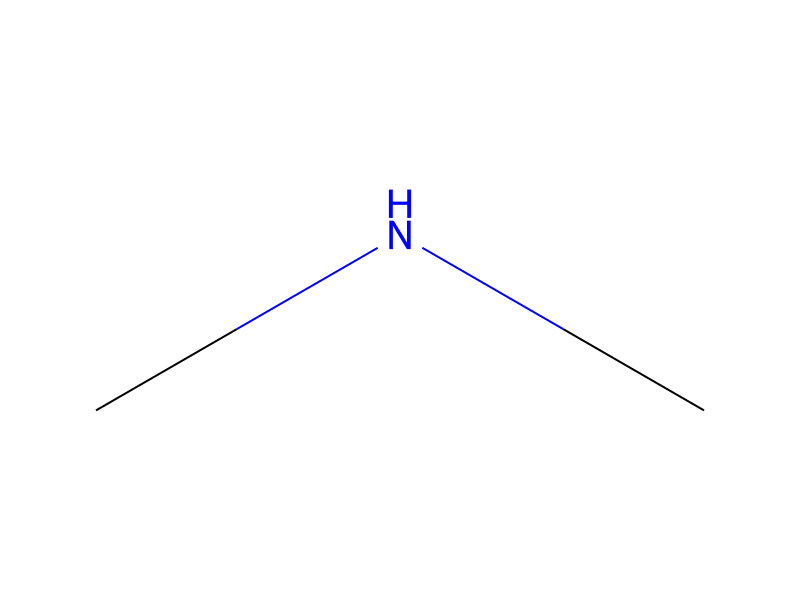
Dimethylamine → 2-Chloro-4-dimethylamino-benzo[4,5]thieno[3,2-d]pyrimidine
Reaction equation

[Cl:1][C:2]1[N:3]=[C:4](Cl)[C:5]2[S:10][C:9]3[CH:11]=[CH:12][CH:13]=[CH:14][C:8]=3[C:6]=2[N:7]=1.[CH3:16][NH:17][CH3:18].C(O)C.O1CCOCC1>O>[Cl:1][C:2]1[N:3]=[C:4]([N:17]([CH3:18])[CH3:16])[C:5]2[S:10][C:9]3[CH:11]=[CH:12][CH:13]=[CH:14][C:8]=3[C:6]=2[N:7]=1Participants





Conditions
- Temperature
- 40 °C
Procedure
A mixture of 2,4-dichlorobenzo[4,5]thieno[3,2-d]pyrimidine (1.0 g), 50% aqueous dimethyl amine (2 mL), ethanol (10 mL), and 1,4-dioxane (10 mL) was stirred at 40° C. for 1 h. Water was added to the reaction mixture, the resulting solids were collected by filtration and washed with water to obtain 2-chloro-4-dimethylamino-benzo[4,5]thieno[3,2-d]pyrimidine (0.98 g). (2) To a mixture of 2-chloro-4-dimethylamino-benzo[4,5]thieno[3,2-d]pyrimidine (0.10 g), Pd2(dba)3 (0.035 g), Xantphos (0.066 g), (S)-t-butyl 3-aminopyrrolidine-1-carboxylate (0.071 mL), and 1,4-dioxane (1 mL) was added sodium t-butoxide (0.11 g) under nitrogen atmosphere, and the mixture was stirred at 60° C. for 6 h and then at room temperature for 15 h. The reaction mixture was diluted with ethyl acetate and water, then the interlayer was removed by Celite filtration, and the organic layer was washed with saturated brine. The organic layer was dried with anhydrous magnesium sulfate, then the desiccant was removed by filtration, the filtrate was concentrated under reduced pressure, and the residue was purified by silica gel column chromatography (ethyl acetate/hexane=2:1) to obtain t-butyl (S)-3-(4-dimethylamino-benzo[4,5]thieno[3,2-d]pyrimidin-2-ylamino)pyrrolidine-1-carboxylate (0.13 g). (3) To a solution of t-butyl (S)-3-(4-dimethylamino-benzo[4,5]thieno[3,2-d]pyrimidin-2-ylamino)pyrrolidine-1-carboxylate (0.13 g) in 1,4-dioxane (1 mL) were added several drops of a solution (1 mL) of 4 M HCl in 1,4-dioxane and concentrated hydrochloric acid, and the mixture was stirred at room temperature for 3 h. To the reaction suspension was added a small amount of methanol, the mixture was stirred, followed by addition of ethyl acetate, and the solids were collected by filtration. The resulting solids were dissolved in ethyl acetate and 1 M aqueous sodium hydroxide, and the aqueous layer was extracted with ethyl acetate. The organic layer was dried with anhydrous magnesium sulfate, then the desiccant was removed by filtration, and the filtrate was concentrated under reduced pressure to obtain (S)-3-(4-dimethylamino-benzo[4,5]thieno[3,2-d]pyrimidin-2-ylamino)pyrrolidine (0.092 g). (4) To a solution of (S)-3-(4-dimethylamino-benzo[4,5]thieno[3,2-d]pyrimidin-2-ylamino)pyrrolidine (0.091 g) in DMF (2 mL) were added 4-trifluoromethoxyphenylacetic acid (0.096 g), HOBt (0.039 g), and EDC.HCl (0.17 g), and the mixture was stirred at room temperature for 1 h. The reaction solution was diluted with ethyl acetate, and then the organic layer was washed with saturated aqueous sodium hydrogencarbonate and saturated brine and dried with anhydrous magnesium sulfate. The desiccant was removed by filtration, and the filtrate was concentrated under reduced pressure. The residue was purified by silica gel column chromatography (chloroform/methanol=40:1) to obtain white solid 1-((S)-3-(4-dimethylamino-benzo[4,5]thieno[3,2-d]pyrimidin-2-ylamino)pyrrolidin-1-yl)-2-(4-trifluoromethoxy-phenyl)ethanone (0.024 g).
Workup
- filtrationthe resulting solids were collected by filtration
- washwashed with water
Sources & evidence
- ORD record
- ord-fc83c4a02d69468c81b22a2a5814ecf2
- Source dataset
- uspto-grants-2011_10
- Patent number
- US08044068B2
Reaction notes
Loading…