1-Phenethylpiperazine → HCID 17419418, compound
Reaction equation

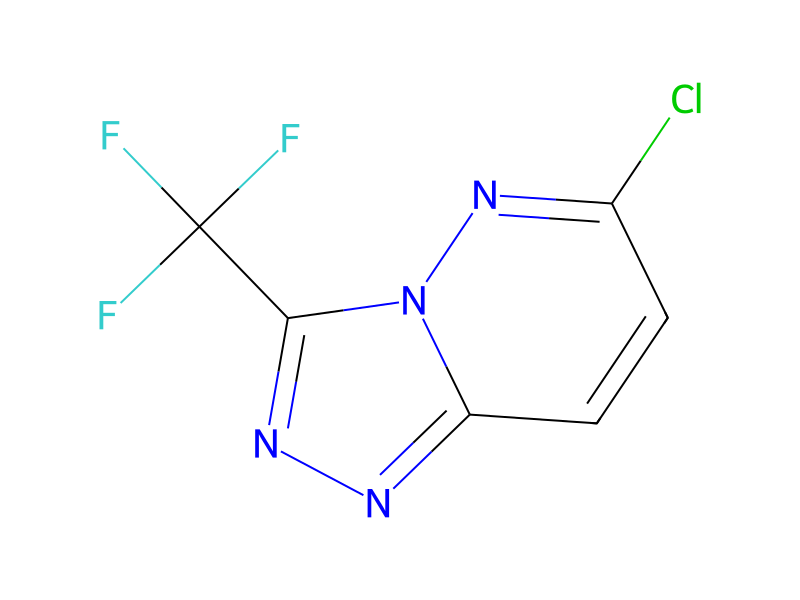
[CH2:1]([N:9]1[CH2:14][CH2:13][NH:12][CH2:11][CH2:10]1)[CH2:2][C:3]1[CH:8]=[CH:7][CH:6]=[CH:5][CH:4]=1.Cl[C:16]1[CH:17]=[CH:18][C:19]2[N:20]([C:22]([C:25]([F:28])([F:27])[F:26])=[N:23][N:24]=2)[N:21]=1>>[CH2:1]([N:9]1[CH2:10][CH2:11][N:12]([C:16]2[CH:17]=[CH:18][C:19]3[N:20]([C:22]([C:25]([F:26])([F:28])[F:27])=[N:23][N:24]=3)[N:21]=2)[CH2:13][CH2:14]1)[CH2:2][C:3]1[CH:4]=[CH:5][CH:6]=[CH:7][CH:8]=1Participants
3


Procedure
A mixture of 1-phenethylpiperazine and 6-chloro-3-(trifluoromethyl)-[1,2,4]triazolo[4,3-b]pyridazine was allowed to react by General Synthetic Method 3. The crude product was purified by hplc using a Waters XTerra C18 column (5μ silica, 19 mm diameter, 100 mm length) eluted with decreasingly polar mixtures of water (containing 0.1% aqueous ammonia) and acetonitrile as eluents to give 6-(4-phenethylpiperazin-1-yl)-3-(trifluoromethyl)-[1,2,4]triazolo[4,3-b]pyridazine.
Workup
- customto react by General Synthetic Method 3
- customThe crude product was purified by hplc
- washeluted with decreasingly polar mixtures of water (containing 0.1% aqueous ammonia) and acetonitrile as eluents
Sources & evidence
- ORD record
- ord-419d796a228a47e7b872b58b86e469e7
- Source dataset
- uspto-grants-2011_08
- Patent number
- US08003649B2
Reaction notes
Loading…