Acetonitrile → 3-Hydroxy3, 3-di(4-biphenylyl) propionitrile
Reaction equation

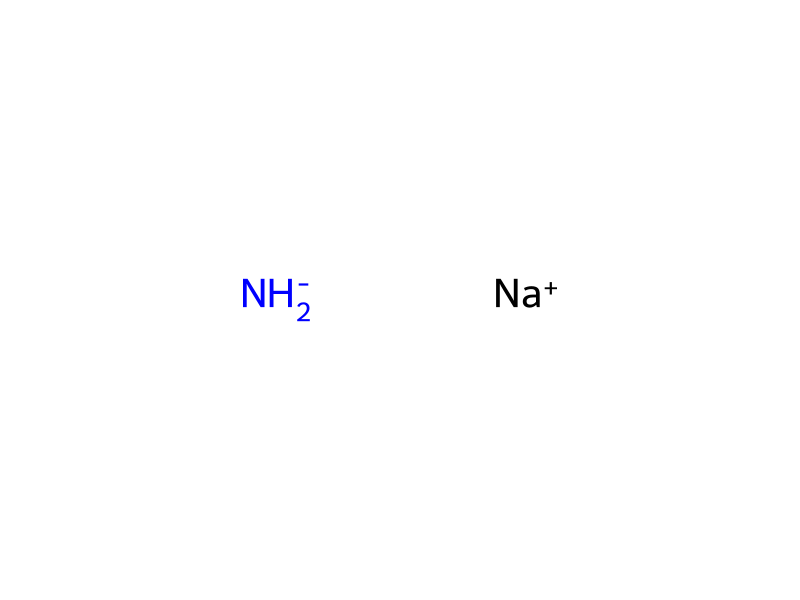
[C:1]1([C:21]2[CH:26]=[CH:25][CH:24]=[CH:23][CH:22]=2)[CH:6]=[CH:5][C:4]([C:7]([C:9]2[CH:14]=[CH:13][C:12]([C:15]3[CH:20]=[CH:19][CH:18]=[CH:17][CH:16]=3)=[CH:11][CH:10]=2)=[O:8])=[CH:3][CH:2]=1.[C:27](#[N:29])[CH3:28].[NH2-].[Na+]>C1C=CC=CC=1>[OH:8][C:7]([C:4]1[CH:3]=[CH:2][C:1]([C:21]2[CH:22]=[CH:23][CH:24]=[CH:25][CH:26]=2)=[CH:6][CH:5]=1)([C:9]1[CH:14]=[CH:13][C:12]([C:15]2[CH:20]=[CH:19][CH:18]=[CH:17][CH:16]=2)=[CH:11][CH:10]=1)[CH2:28][C:27]#[N:29]Participants
Reactant 3


Product 1

Reagents, catalysts & solvents 1

Procedure
Di-4-biphenylyl ketone was reacted with acetonitrile in benzene in the presence of sodamide by the method of Lettre and Wick (Annalen, 1957, 603, 194) to give 3-hydroxy-3, 3-di(4-biphenylyl) propionitrile, m.p. 168°-170° C, after recrystallisation from benzene. The nitrile (8.0 g.) dissolved in a mixture of tetrahydrofuran (80 ml.) and ether (80 ml.) was added over 30 minutes at room temperature under nitrogen to a stirred suspension of lithium aluminium hydride (2.88 g.) in ether (75 ml.). After stirring a further hour the mixture was decomposed by addition of water (2.8 ml.) and aqueous N sodium hydroxide (12 ml.) After filtration, the organic layer was separated and evaporated to give a solid which recrystallised from benzene/light petroleum (b.p. 80°-100° C), gave 1,1-di(4-biphenylyl)-3-aminopropan-1-ol, prisms, m.p. 176°-8° C,λmax (ethanol) = 260 nm. The carbinol (6.5 g.) boiled under reflux for 1 hour with glacial acetic acid (40 ml.) and concentrated hydrochloric acid (10 ml.) gave 1, 1-di-(4-biphenylyl)-3-aminoprop-1-ene hydrochloride, needles from n-propanol, m.p. 231°-232° C. The base, from ethanol, had m.p. 127°-8° C, λmax (ethanol) = 274 nm.
Sources & evidence
- ORD record
- ord-908215e283e04f71b697cc3daabba6a6
- Source dataset
- uspto-grants-1978_03
- Patent number
- US04079081
Reaction notes
Loading…