Hydrochloric Acid → HCID 23458234, compound
Reaction equation

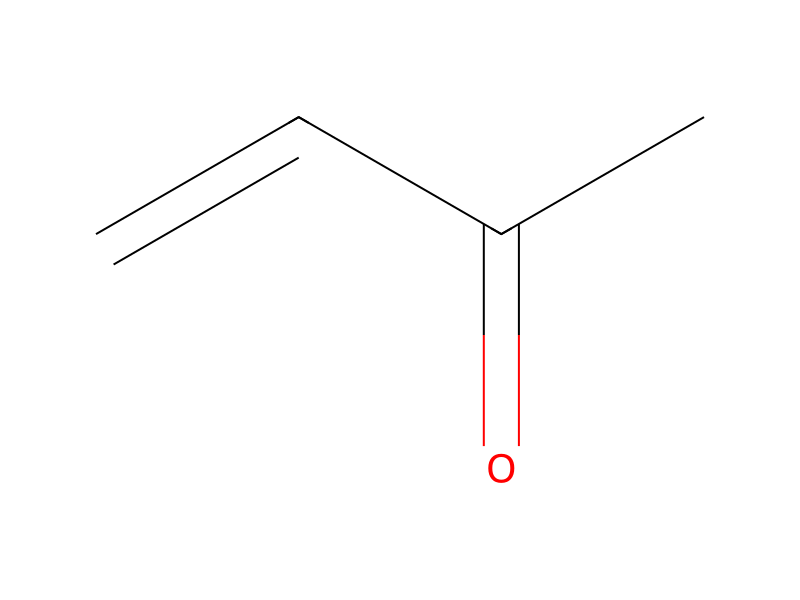
[CH3:1][C:2](=[O:5])[CH:3]=[CH2:4].[N:6]1[CH:11]=[CH:10][CH:9]=[CH:8][C:7]=1[NH:12][C:13](=[S:15])[S-:14].C([NH+](CC)CC)C.Cl.C(OC(C)C)(C)C>C(#N)C.C(OCC)C.C(Cl)Cl>[N:6]1[CH:11]=[CH:10][CH:9]=[CH:8][C:7]=1[NH:12][C:13](=[S:14])[S:15][CH2:4][CH2:3][C:2](=[O:5])[CH3:1]Participants
Reactant 4



Product 1

Reagents, catalysts & solvents 3



Procedure
A solution of but-3-en-2-one (11.6 g) in anhydrous acetonitrile (15 cc) is added, at a maximum temperature of 5° C., to a suspension of triethylammonium pyrid-2-yldithiocarbamate (45.0 g) in anhydrous acetonitrile (280 cc). The reaction is allowed to proceed for 2 hours at a maximum temperature of 2° C. A 3.5 N solution of anhydrous hydrogen chloride in diethyl ether (47.5 cc) is added at a maximum temperature of 0° C. The triethylamine hydrochloride is filtered off and washed twice with a mixture of acetonitrile and diethyl ether (40 cc and 140 cc, respectively). The solvents are evaporated off under reduced pressure (20 mmHg) at 45° C. The residue is treated with diethyl ether (600 cc). The ethereal solution is washed twice with distilled water (total 240 cc), dried over sodium sulphate and the solvent evaporated off. The residue obtained (30.2 g) is dissolved in methylene chloride (120 cc), silica (0.2-0.5 mm; 25.0 g) is added and the solvent is then evaporated off. The silica impregnated with the product is introduced onto a column of diameter 4 cm, containing silica (0.2-0.5 mm; 300 g). Elution is carried out successively with a mixture of cyclohexane (1,600 cc) and ethyl acetate (400 cc) and then with a mixture of cyclohexane (375 cc) and ethyl acetate (125 cc) and the eluates are discarded. Elution is continued with a mixture of cyclohexane (1,800 cc) and ethyl acetate (600 cc). The eluate is collected and then evaporated to dryness under reduced pressure (20 mmHg) at 45° C. The crystals obtained (24.5 g; m.p. about 65° C.) are treated with a mixture of diisopropyl ether (60 cc) and diethyl ether (60 cc). The crystals are filtered off, washed successively with a mixture of diisopropyl ether (25 cc) and diethyl ether (25 cc) and then twice with diisopropyl ether (50 cc) and dried under reduced pressure (20 mmHg) at 40° C. 3-Oxobutyl pyrid-2-yldithiocarbamate (21.2 g) (structure determined by IR spectroscopy in petroleum jelly), which melts at 74° C., is thus obtained.
Workup
- filtrationThe triethylamine hydrochloride is filtered off
- washwashed twice with a mixture of acetonitrile and diethyl ether (40 cc and 140 cc
- customThe solvents are evaporated off under reduced pressure (20 mmHg) at 45° C
- additionThe residue is treated with diethyl ether (600 cc)
- washThe ethereal solution is washed twice with distilled water (total 240 cc)
- dry with materialdried over sodium sulphate
- customthe solvent evaporated off
- customThe residue obtained (30.2 g)
- additionsilica (0.2-0.5 mm; 25.0 g) is added
- customthe solvent is then evaporated off
- additionis introduced onto a column of diameter 4 cm
- additioncontaining silica (0.2-0.5 mm; 300 g)
- washElution
- additionis carried out successively with a mixture of cyclohexane (1,600 cc) and ethyl acetate (400 cc)
- additionwith a mixture of cyclohexane (375 cc) and ethyl acetate (125 cc)
- washElution
- additionis continued with a mixture of cyclohexane (1,800 cc) and ethyl acetate (600 cc)
- customThe eluate is collected
- customevaporated to dryness under reduced pressure (20 mmHg) at 45° C
- customThe crystals obtained (24.5 g; m.p. about 65° C.)
- filtrationThe crystals are filtered off
- washwashed successively with a mixture of diisopropyl ether (25 cc) and diethyl ether (25 cc)
- dry with materialtwice with diisopropyl ether (50 cc) and dried under reduced pressure (20 mmHg) at 40° C
Sources & evidence
- ORD record
- ord-08bfb6f3646b4197bc0897254bb83c3f
- Source dataset
- uspto-grants-1981_06
- Patent number
- US04271156
Reaction notes
Loading…