Sodium Hydroxide → HCID 23457230, compound
Reaction equation

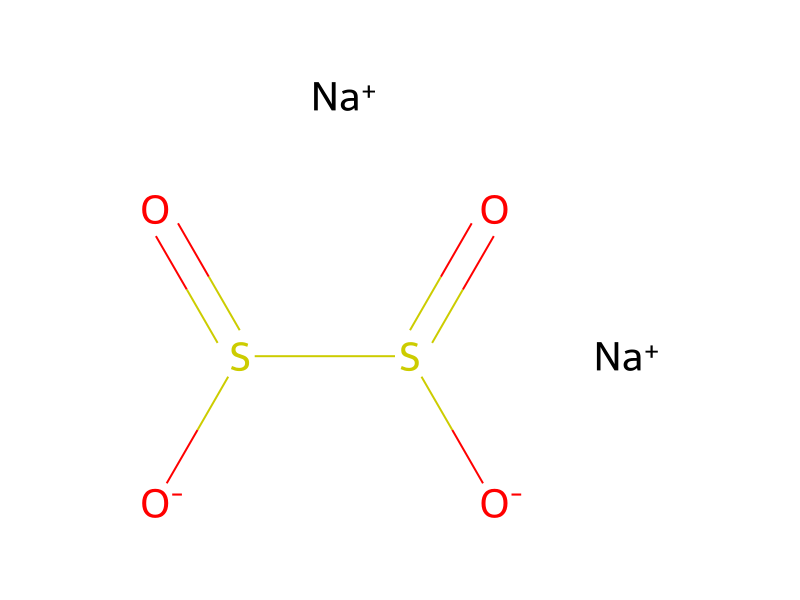
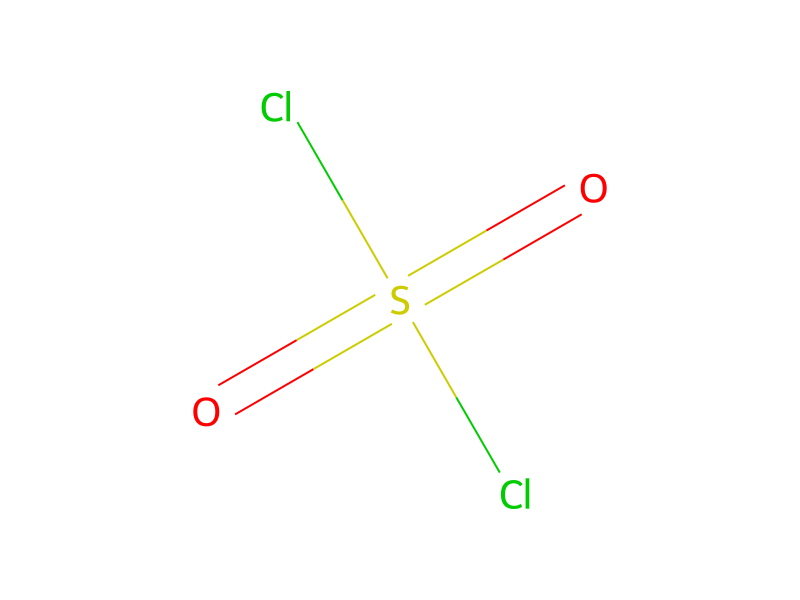
S(Cl)([Cl:4])(=O)=O.[Cl:6][C:7]1[CH:22]=[CH:21][CH:20]=[C:19]([Cl:23])[C:8]=1[NH:9][C:10]1[C:11]([CH2:15][C:16]([OH:18])=[O:17])=[CH:12][S:13][CH:14]=1.[OH-].[Na+].S(S([O-])=O)([O-])=O.[Na+].[Na+]>C(Cl)Cl>[Cl:4][C:14]1[S:13][CH:12]=[C:11]([CH2:15][C:16]([OH:18])=[O:17])[C:10]=1[NH:9][C:8]1[C:19]([Cl:23])=[CH:20][CH:21]=[CH:22][C:7]=1[Cl:6]Participants
6
Reactant 4


Product 1

Reagents, catalysts & solvents 1

Procedure
1.35 g (10 mmoles) of sulfuryl chloride in 20 ml of methylene chloride are added dropwise to a solution of 3.02 g (10 mmoles) of 4-(2,6-dichloroanilino)-3-thiophenacetic acid in 15 ml of methylene chloride at -15°. After 10 minutes, 10 ml each of 2 N NaOH and 10 percent strength (aq) sodium dithionite solution are added. The aqueous phase is separated off, acidified and extracted with ethyl acetate, and the product phase is dried and concentrated. Recrystallization of the residue from cyclohexane yields pure 5-chloro-4-(2,6-dichloroanilino)-3-thiophenacetic acid (d. 141° to 142°).
Workup
- customThe aqueous phase is separated off
- extractionextracted with ethyl acetate
- customthe product phase is dried
- concentrationconcentrated
- customRecrystallization of the residue from cyclohexane
Sources & evidence
- ORD record
- ord-f4b8004377964756907e9de4b0b92a0d
- Source dataset
- uspto-grants-1981_06
- Patent number
- US04272507
Reaction notes
Loading…