Sodium Hydroxide → 2H-Benzimidazol-2-one, 1,3-dihydro-6-chloro-1-(4-chlorophenyl)-
Reaction equation

[OH-].[Na+].[CH:3]1[C:8]([NH:9][C:10]([NH:12][C:13]2[CH:18]=[CH:17][C:16]([Cl:19])=[CH:15][CH:14]=2)=[O:11])=[CH:7][CH:6]=[C:5]([Cl:20])[CH:4]=1.Cl[O-].[Na+]>O.CO>[Cl:20][C:5]1[CH:4]=[CH:3][C:8]2[NH:9][C:10](=[O:11])[N:12]([C:13]3[CH:18]=[CH:17][C:16]([Cl:19])=[CH:15][CH:14]=3)[C:7]=2[CH:6]=1Participants





Procedure
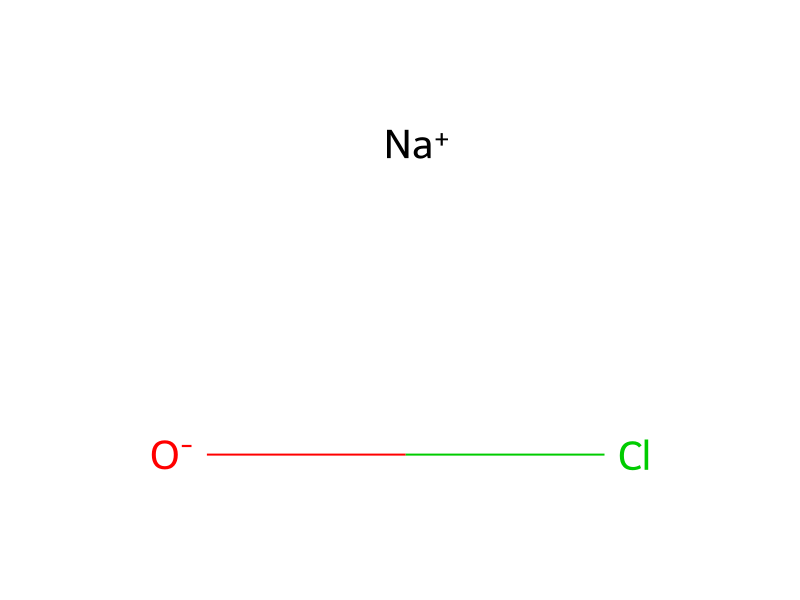
A solution of sodium hydroxide (4 grams (g)) in water (15 milliliters (ml)) was added to a solution of 4,4'-dichlorocarbanilide (14.1 g, 0.05 mole) in methanol (300 ml). Sodium hypochlorite solution (100 ml, 1 N in 0.1 molar sodium hydroxide) was then added dropwise over 30 minutes to the vigorously stirred reaction mixture, maintaining the temperature below 35° C. by means of an ice bath. Stirring was continued at room temperature for 5 hours after which the small amount of solid present was removed by filtration. The filtrate was evaporated to a volume of about 50 ml, diluted with water (500 ml), and subsequently acidified to a pH of 3 with hydrochloric acid. The product was then filtered, washed with water, dried at 80° C. and identified as 6-chloro-1-(4-chlorophenyl)-2-benzimidazolinone by infrared spectra. The product recovery was 66 percent of theoretical and the product melted at 239° C. (recrystallized from toluene).
Workup
- temperaturemaintaining the temperature below 35° C. by means of an ice bath
- customafter which the small amount of solid present was removed by filtration
- customThe filtrate was evaporated to a volume of about 50 ml
- additiondiluted with water (500 ml)
- filtrationThe product was then filtered
- washwashed with water
- customdried at 80° C.
Sources & evidence
- ORD record
- ord-52c9477683c04374810447eef3a0c095
- Source dataset
- uspto-grants-1981_06
- Patent number
- US04275215
Reaction notes
Loading…