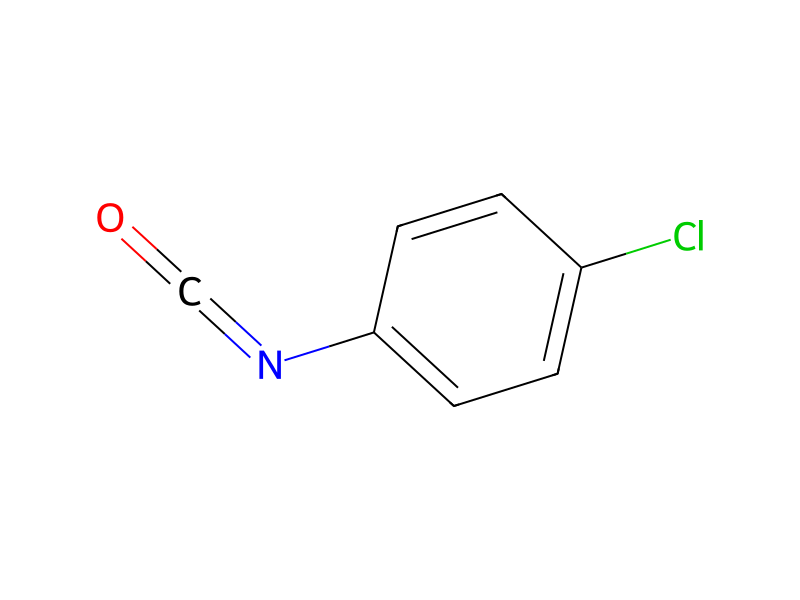
4-Chlorophenyl Isocyanate → HCID 19807337, compound
Reaction equation

[NH:1]1[C:9]2[C:4](=[CH:5][CH:6]=[CH:7][CH:8]=2)[CH:3]=[C:2]1[S:10]([NH2:13])(=[O:12])=[O:11].[Cl:14][C:15]1[CH:20]=[CH:19][C:18]([N:21]=[C:22]=[O:23])=[CH:17][CH:16]=1>>[Cl:14][C:15]1[CH:20]=[CH:19][C:18]([NH:21][C:22]([NH:13][S:10]([C:2]2[NH:1][C:9]3[C:4]([CH:3]=2)=[CH:5][CH:6]=[CH:7][CH:8]=3)(=[O:11])=[O:12])=[O:23])=[CH:17][CH:16]=1Participants
3


Procedure
The procedure of Method A was followed in that -indolesulfonamide (10.2 mmol) was reacted with 4-chlorophenylisocyanate (10.2 mmol) to obtain 2.1 g of title product as a solid. The 2-indolesulfonamide was prepared by procedures well known in the art. See, e.g., European Patent Application 070698 (published Jan. 26, 1983). 1H NMR (CD3SOCD3): δ12.14 (s, 1 H), 10.82 (bs, 1 H), 9.07 (s, 1 H), 7.73 (d, J =8 Hz, 1 H), 7.56 (d, J =8 Hz, 1 H), 7.43 (d, J =9 Hz, 2 H), 7.34 (d, J =9 Hz, 2 H), 7.32 (m, H), 7.19 (m, 1 H), 7.15 (dd, J =6, 8 Hz, 1 H).
Sources & evidence
- ORD record
- ord-2b45a5ba220648e28a056579fdfc01ca
- Source dataset
- uspto-grants-1992_12
- Patent number
- US05169860
Reaction notes
Loading…