Diisopropylamine → HCID 801007, compound
Reaction equation

[CH3:1][O:2][C:3]1[CH:11]=[C:10]([O:12][CH3:13])[CH:9]=[CH:8][C:4]=1[C:5](Cl)=[O:6].[CH:14]([NH:17][CH:18]([CH3:20])[CH3:19])([CH3:16])[CH3:15]>ClCCl>[CH3:1][O:2][C:3]1[CH:11]=[C:10]([O:12][CH3:13])[CH:9]=[CH:8][C:4]=1[C:5]([N:17]([CH:18]([CH3:20])[CH3:19])[CH:14]([CH3:16])[CH3:15])=[O:6]Participants
4
Reactant 2

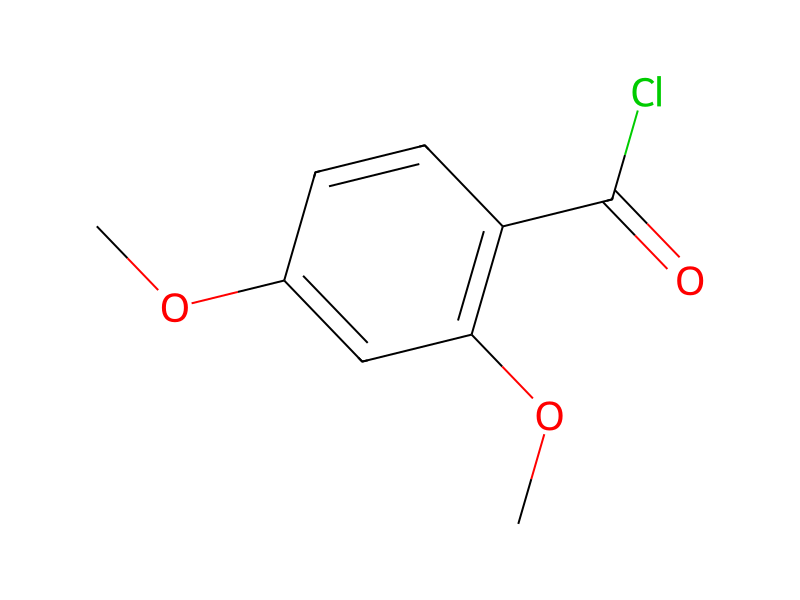
Product 1

Reagents, catalysts & solvents 1

Procedure
A stirred solution of 2,4-dimethoxybenzoyl chloride (10.0 g, 50 mmol) in 10 mL of dichloromethane at 0° C. is treated with 30 mL of diisopropylamine. This solution is stirred at room temperature for 1 hour and the resulting solution is partitioned between ethyl acetate and water. The organic layer is washed with 1N hydrochloride solution, 1N sodium hydroxide solution, water and brine, dried over sodium sulfate and concentrated in vacuo to give 2,4-dimethoxy-N,N-bis(1-methylethyl)benzamide.
Workup
- customthe resulting solution is partitioned between ethyl acetate and water
- washThe organic layer is washed with 1N hydrochloride solution, 1N sodium hydroxide solution, water and brine
- dry with materialdried over sodium sulfate
- concentrationconcentrated in vacuo
Sources & evidence
- ORD record
- ord-c4a1638fa6d14bbd831fc6ef21058a55
- Source dataset
- uspto-grants-1997_06
- Patent number
- US05639768
Reaction notes
Loading…