Sodium hydride → 3-(N-t-Butoxycarbonyl-1,2,5,6-tetrahydropyrid-4-yl)-5-(3-nitropyrid-2-yloxy)-1H-indole
Reaction equation

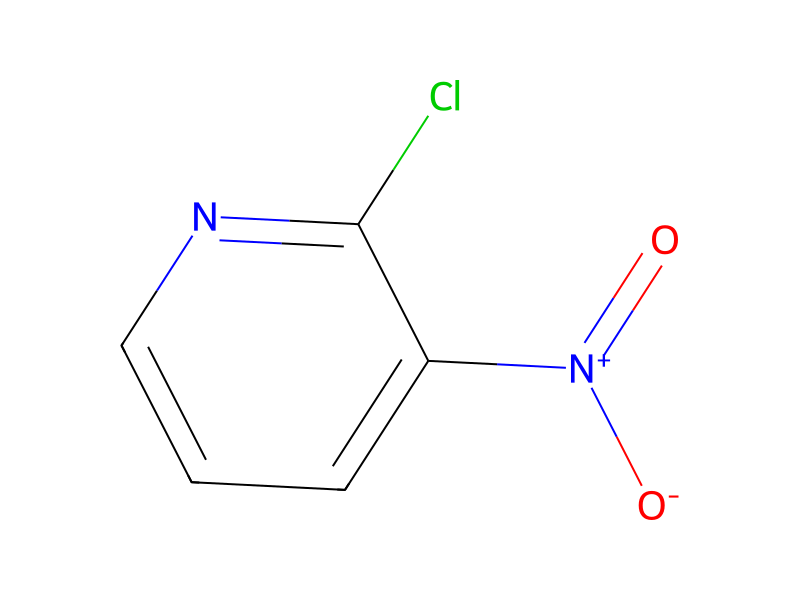
[C:1]([O:5][C:6]([N:8]1[CH2:13][CH2:12][C:11]([C:14]2[C:22]3[C:17](=[CH:18][CH:19]=[C:20]([OH:23])[CH:21]=3)[NH:16][CH:15]=2)=[CH:10][CH2:9]1)=[O:7])([CH3:4])([CH3:3])[CH3:2].Cl[C:25]1[C:30]([N+:31]([O-:33])=[O:32])=[CH:29][CH:28]=[CH:27][N:26]=1.[H-].[Na+]>O1CCCC1>[C:1]([O:5][C:6]([N:8]1[CH2:13][CH2:12][C:11]([C:14]2[C:22]3[C:17](=[CH:18][CH:19]=[C:20]([O:23][C:25]4[C:30]([N+:31]([O-:33])=[O:32])=[CH:29][CH:28]=[CH:27][N:26]=4)[CH:21]=3)[NH:16][CH:15]=2)=[CH:10][CH2:9]1)=[O:7])([CH3:4])([CH3:2])[CH3:3]Participants
Reactant 3


Product 1

Reagents, catalysts & solvents 1

Procedure
3-(N-t-Butoxycarbonyl-1,2,5,6-tetrahydropyrid-4-yl)-5-hydroxy-1H-indole and 2-chloro-3-nitropyridine were used. Sodium hydride (60% in oil) was the base, tetrahydrofuran was the reaction solvent, the reaction was stirred at room temperature for 3 hours, and the chromatographic solvent system was diethyl ether/hexanes [gradient 1:1 to 4:1] to afford the title compound (62%) as a yellow solid: top, 206.0°-208.0° C. with effervescence; 1H NMR (DMSO-d6) δ8.53 (dd, J=1.8 and 8.3 Hz, 1H), 8.33 (dd, J=1.8 and 4.4 Hz, 1H), 7.62 (d, J=2.0 Hz, 1H), 7.50 (br s, 1H), 7.42 (d, J=8.6 Hz, 1H), 7.30 (dd, J=4.4 and 8.3 Hz, 1H), 6.94 (dd, J=2.0 and 8.6 Hz, 1H), 6.05-6.01 (m, 1H), 4.02-3.94 (m, 2H), 3.54 (br t, J=5.6 Hz, 2H), 2.54-2.45 (m, 2H), 1.42 (s, 9H); TLC [methylene chloride/hexanes, 1:1]: Rf =0.2; TLC [diethyl ether]: Rf 32 0.3.
Sources & evidence
- ORD record
- ord-745773e796ee4ff689ed2b4b88e417a5
- Source dataset
- uspto-grants-1997_06
- Patent number
- US05639752
Reaction notes
Loading…