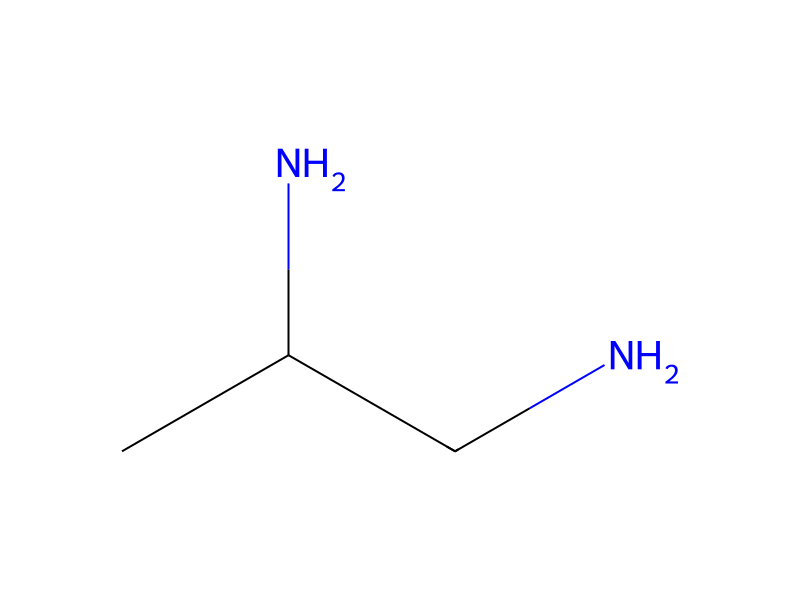
Propylenediamine → HCID 15340540, compound
Reaction equation

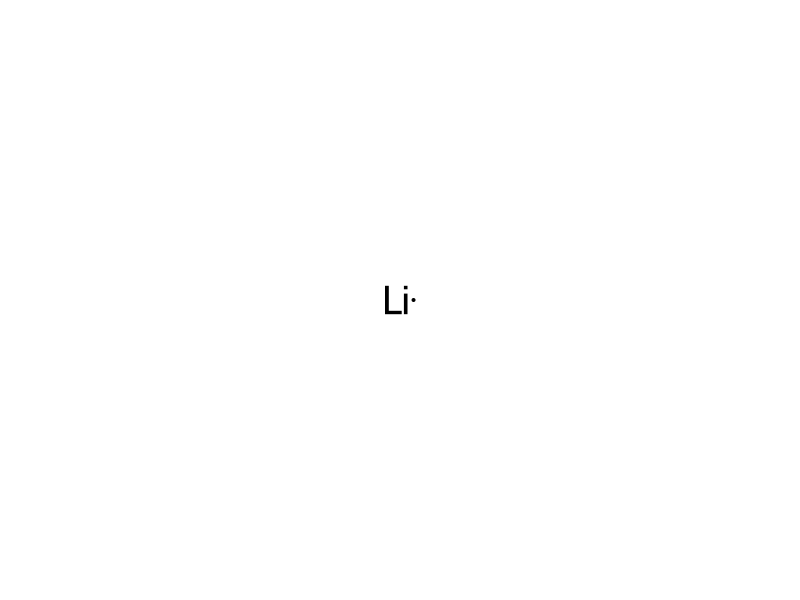
[Li].C(N)C(N)C.[CH2:7]([OH:38])[CH2:8][CH2:9][CH2:10][CH2:11][CH2:12][CH2:13][CH2:14][CH2:15][C:16]#[C:17][CH2:18][CH2:19][CH2:20][CH2:21][CH2:22][CH2:23][CH2:24][CH2:25][CH2:26][CH2:27][CH2:28][CH2:29][CH2:30][CH2:31][CH2:32][CH2:33][CH2:34][CH2:35][CH2:36][CH3:37]>>[CH2:7]([OH:38])[CH2:8][CH2:9][CH2:10][CH2:11][CH2:12][CH2:13][CH2:14][CH2:15][CH2:16][CH2:17][CH2:18][CH2:19][CH2:20][CH2:21][CH2:22][CH2:23][CH2:24][CH2:25][CH2:26][CH2:27][CH2:28][CH2:29][CH2:30][CH2:31][CH2:32][CH2:33][CH2:34][CH2:35][C:36]#[CH:37]Participants
4


Procedure
1.0 g (0.1448 mol) of lithium wire was added in small pieces to 75 ml of propylenediamine under an argon atmosphere at room temperature. The mixture was stirred for 15 min at room temperature and then heated at 70° C. until the blue coloration had disappeared. It was cooled to room temperature, 10 g (0.0891 mol) of potassium t-butylate were added, the mixture was stirred for 15 min at room temperature and 10 g (0.0223 mol) of hentriacont-10-yn-1-ol of Example 9 were added as a solid. The mixture was left to stand overnight at room temperature, poured into ice-water and stirred for 30 min at room temperature. The product was filtered off with suction and dried under high vacuum.
Workup
- temperatureheated at 70° C. until the blue coloration
- temperatureIt was cooled to room temperature
- stirringthe mixture was stirred for 15 min at room temperature
- waitThe mixture was left
- waitto stand overnight at room temperature
- stirringstirred for 30 min at room temperature
- filtrationThe product was filtered off with suction
- customdried under high vacuum
Sources & evidence
- ORD record
- ord-6bcc569b480843ea91ed9eccc6ef0ed9
- Source dataset
- uspto-grants-1997_06
- Patent number
- US05641767
Reaction notes
Loading…