12-Bromo-1-dodecanol → 12-Bromododecanoic Acid
Reaction equation

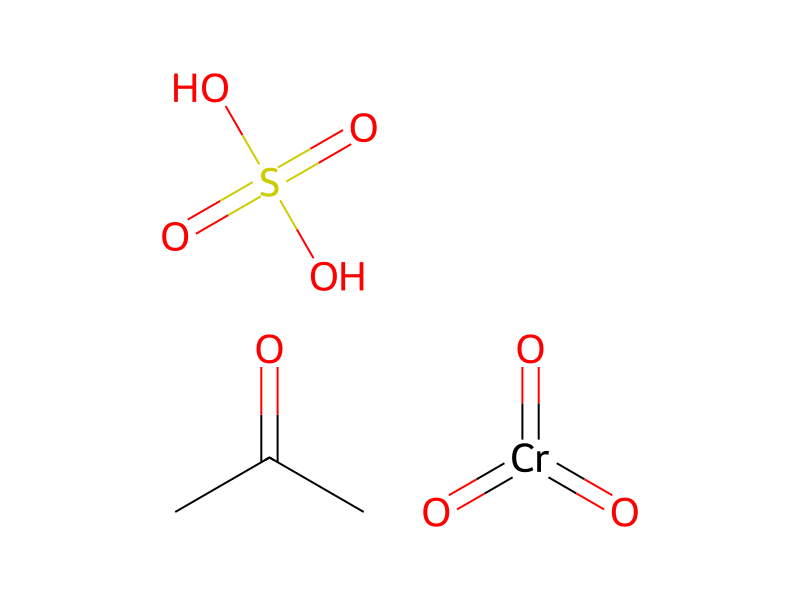
[Br:1][CH2:2][CH2:3][CH2:4][CH2:5][CH2:6][CH2:7][CH2:8][CH2:9][CH2:10][CH2:11][CH2:12][CH2:13][OH:14].CC(C)=[O:17].OS(O)(=O)=O.O=[Cr](=O)=O>>[Br:1][CH2:2][CH2:3][CH2:4][CH2:5][CH2:6][CH2:7][CH2:8][CH2:9][CH2:10][CH2:11][CH2:12][C:13]([OH:17])=[O:14]Participants


Procedure
To this end, 12-bromo-1-dodecanol is oxidized with Jones' reagent to form 12-bromo-1-dodecanoic acid. Then the white solid acid is esterified with diazomethane to form the corresponding methyl ester. The methyl ester is treated directly with imidazole and reacted at 80° C. for five hours until it forms 12-imidazolyl-1-dodecanoic acid methyl ester. The thick mass, which is obtained in this way, is split between water and dichloromethane; and the organic phase is dried over Na2SO4 and concentrated by evaporation. The oily residue is cleaned chromatographically on silica gel and then dissolved in a mixture of methanol and tetrahydrofuran (3:4), treated with LiOH.H2O, and the mixture is heated under reflux for two hours. Following evaporation of the solvent, the white residue is dissolved again in water, extracted with dichloromethane, acidified to a pH 5-6, and extracted again with ethyl acetate. The ethyl acetate extract is dried over Na2SO4, filtered and concentrated by evaporation. The white solid is recrystallized from methanol/ether and yields 12-imidazolyl-1-dodecanoic acid.
Sources & evidence
- ORD record
- ord-75e6dc45c2d740d1838bd52f4be67fe3
- Source dataset
- uspto-grants-2012_04
- Patent number
- US08153676B2
Reaction notes
Loading…