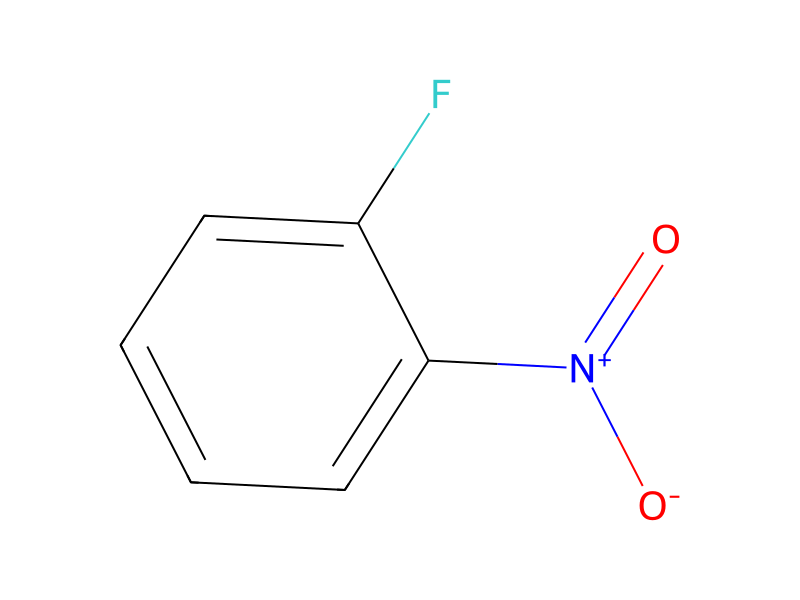
1-Fluoro-2-nitrobenzene → 2-Fluorodibenzo[B,F][1,4]thiazepin-11(10H)-one
Reaction equation

[N+](C1C=CC=CC=1F)([O-])=O.NC1(SC2C=C(F)C=CC=2)C=CC=CC1.C1([O:32][C:33](=O)[NH:34][C:35]2[CH:40]=[CH:39][CH:38]=[CH:37][C:36]=2[S:41][C:42]2[CH:47]=[CH:46][C:45]([F:48])=[CH:44][CH:43]=2)C=CC=CC=1>>[F:48][C:45]1[CH:44]=[CH:43][C:42]2[S:41][C:36]3[CH:37]=[CH:38][CH:39]=[CH:40][C:35]=3[NH:34][C:33](=[O:32])[C:47]=2[CH:46]=1Participants
4


Procedure
Thus, 1-chloro-2-nitrobenzene may be reacted with 4-fluorobenzenethiol in the presence of a base to form 1-nitro-2-phenylsulfanyl-(4-fluorobenzene). The nitrofluorobenzene may be reduced to 1-amino-2-phenylsulfanyl-(4-fluorobenzene) which can converted (for example, as shown) to [2-(4-fluoro-phenylsulfanyl)-phenyl]-carbamic acid phenyl ester. Such an ester may be cyclized as shown to form 2-fluoro-10H-dibenzo[b,f][1,4]thiazepin-11-one, that may be converted to 11-chloro-2-fluoro-dibenzo[b,f][1,4]thiazepine, which can then be reacted with piperazine to form the title compound.
Sources & evidence
- ORD record
- ord-956d545865c64810b5e2276719d70a5a
- Source dataset
- uspto-grants-2012_04
- Patent number
- US08158618B2
Reaction notes
Loading…