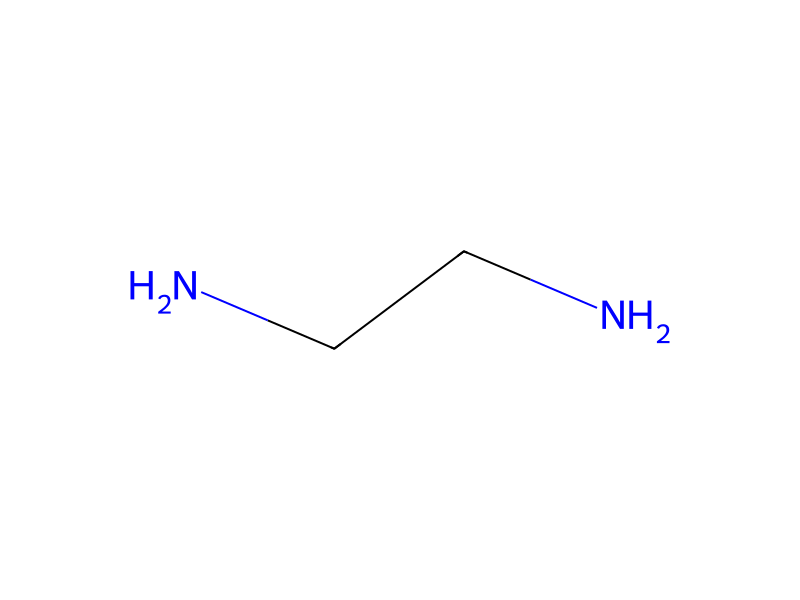
Ethylenediamine → 4-(2-Aminoethyl)benzonitrile
Reaction equation

F[C:2]1[CH:9]=[CH:8][C:5]([C:6]#[N:7])=[CH:4][CH:3]=1.[CH2:10](N)[CH2:11][NH2:12]>>[NH2:12][CH2:11][CH2:10][C:2]1[CH:9]=[CH:8][C:5]([C:6]#[N:7])=[CH:4][CH:3]=1Participants
3


Procedure
4-Fluorobenzonitrile is reacted with an excess of ethylenediamine in an aprotic solvent to give 4-(2-aminoethyl)benzonitrile, which is then mono-alkylated with ethyl bromoacetate in a polar solvent such as ethanol or acetonitrile, in the presence of an inorganic base or a tertiary amine. An acylation with chloroacetyl chloride followed by a cyclization and a hydrolysis give the acid (1).
Sources & evidence
- ORD record
- ord-bd58d6e0eff640daa9fa9a1b13f1a28f
- Source dataset
- uspto-grants-2002_02
- Patent number
- US06344456B1
Reaction notes
Loading…