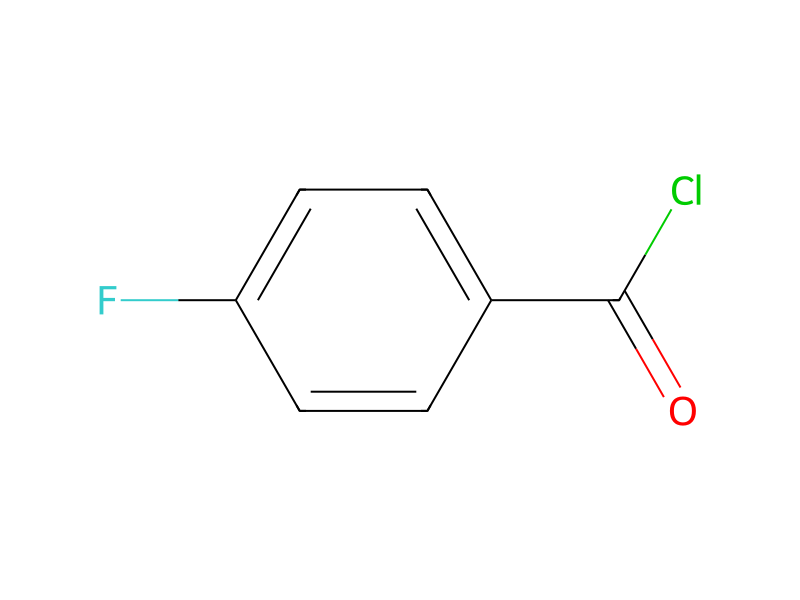
4-Fluorobenzoyl chloride → HCID 18318487, compound
Reaction equation

[CH2:1]([O:8][C:9]1[CH:10]=[CH:11][C:12]2[CH:16]=[C:15]([N:17]([CH3:19])[CH3:18])[S:14][C:13]=2[CH:20]=1)[C:2]1[CH:7]=[CH:6][CH:5]=[CH:4][CH:3]=1.[F:21][C:22]1[CH:30]=[CH:29][C:25]([C:26](Cl)=[O:27])=[CH:24][CH:23]=1>>[F:21][C:22]1[CH:30]=[CH:29][C:25]([C:26]([C:16]2[C:12]3[CH:11]=[CH:10][C:9]([O:8][CH2:1][C:2]4[CH:3]=[CH:4][CH:5]=[CH:6][CH:7]=4)=[CH:20][C:13]=3[S:14][C:15]=2[N:17]([CH3:18])[CH3:19])=[O:27])=[CH:24][CH:23]=1Participants
3


Procedure
Using a procedure similar to that described in Example 1-A, 6-benzyloxy-2-(dimethylamino)benzo[b]thiophene was acylated with p-fluorobenzoyl choride to afford 6-benzyloxy-2-(dimethylamino)benzo[b]thiophen-3-yl 4-fluorophenyl ketone which was treated with 4-[2-(1-pyrrolidinyl) ethoxy]phenyl magnesium bromide using a procedure similar to that described in Example 1-B to afford title compound in 84% overall yield.
Sources & evidence
- ORD record
- ord-d250164148fb4297accfc98f1f20bda4
- Source dataset
- uspto-grants-2002_02
- Patent number
- US06350774B1
Reaction notes
Loading…