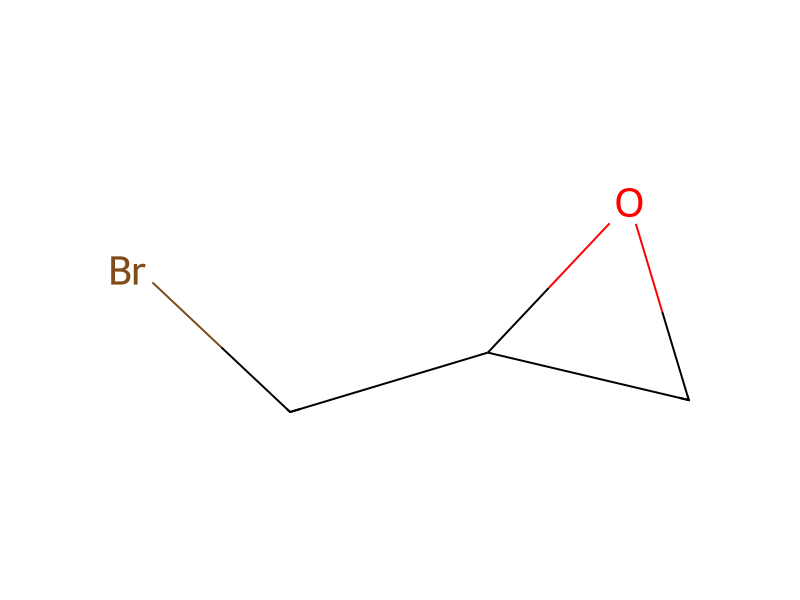
Epibromohydrin → HCID 13688278, compound
Reaction equation

[OH:1][C:2]1[CH:7]=[CH:6][C:5]([C:8]2[N:17]([CH3:18])[C:16](=[O:19])[C:15]3[C:10](=[CH:11][CH:12]=[C:13]([O:20][CH3:21])[CH:14]=3)[N:9]=2)=[CH:4][CH:3]=1.[CH2:22]([CH:24]1[O:26][CH2:25]1)Br>CS(C)=O>[O:26]1[CH:24]([CH3:22])[CH:25]1[O:1][C:2]1[CH:7]=[CH:6][C:5]([C:8]2[N:17]([CH3:18])[C:16](=[O:19])[C:15]3[C:10](=[CH:11][CH:12]=[C:13]([O:20][CH3:21])[CH:14]=3)[N:9]=2)=[CH:4][CH:3]=1Participants
4
Reactant 2

Product 1

Reagents, catalysts & solvents 1

Procedure
2.8 gm (10 mmols) of 2-(4-hydroxyphenyl)-3-methyl-6-methoxy-3,4-dihydro-quinazolin-4-one were dissolved in 20 ml of dimethylsulfoxide, and the solution was mixed, while stirring, with 1.35 gm (10 mmols+20%) of potassium tert. butylate. Subsequently, 2.8 ml of epibromohydrin were added, and the reaction mixture was stirred at room temperature until the reaction had gone to completion. After pouring the reaction mixture into ice water, the crystalline precipitate formed thereby was suction-filtered off, washed well with water and dried.
Workup
- additionthe solution was mixed
- customthe crystalline precipitate formed
- filtrationthereby was suction-filtered off
- washwashed well with water
- customdried
Sources & evidence
- ORD record
- ord-158a26fcfe3645848e33e67fc40cdd24
- Source dataset
- uspto-grants-1983_04
- Patent number
- US04379788
Reaction notes
Loading…