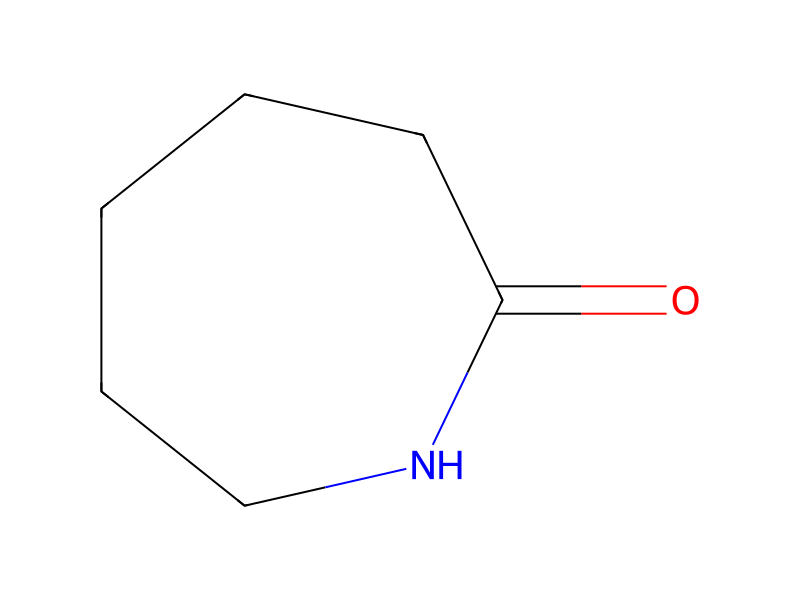
Caprolactam → HCID 20525473, compound
Reaction equation

[C:1]1(=[O:8])[NH:7][CH2:6][CH2:5][CH2:4][CH2:3][CH2:2]1.[OH-:9].[Na+].[CH2:11]([CH:13]([CH2:17][CH2:18][CH2:19][CH3:20])[C:14](Cl)=[O:15])[CH3:12]>O>[CH2:11]([CH:13]([CH2:17][CH2:18][CH2:19][CH3:20])[C:14]([CH:2]([CH2:3][CH2:4][CH2:5][CH2:6][NH2:7])[C:1]([OH:8])=[O:9])=[O:15])[CH3:12]Participants
Reactant 3


Product 1

Reagents, catalysts & solvents 1

Conditions
- Temperature
- 20 °C
Procedure
113 g (1.0 mol) of ε-caprolactam are dissolved in 200 ml of water, and refluxed for 4 hours with 120 g (1.0 mol) of 33% sodium hydroxide solution. The batch is cooled to 20° C., and 158.4 g (0.975 mol) of 2-ethylhexanoic acid chloride as well as simultaneously about 120 g of 33% sodium hydroxide solution (for maintaining a pH of 12) are added dropwise within 1 hour at 20°-25° C. The solution is further stirred until no sodium hydroxide solution is consumed any longer, and subsequently acidified at 50° C. with semiconcentrated hydrochloric acid in order to obtain a pH of 1. Separation is carried out in warm state, and the acid is washed with 350 ml of water. Subsequently, it is dehydrated in a rotation evaporator at 75° C./100 mm Hg, and separated as nearly colorless viscous oil, which solidifies to crystals after some time. Yield 233 g (93%). Acid number 225, water content 0.4%.
Workup
- additionare added dropwise within 1 hour at 20°-25° C
- customis consumed any longer, and
- customsubsequently acidified at 50° C. with semiconcentrated hydrochloric acid in order
- customto obtain a pH of 1
- customSeparation
- washthe acid is washed with 350 ml of water
- customSubsequently, it is dehydrated in a rotation evaporator at 75° C./100 mm Hg
- customseparated as nearly colorless viscous oil, which
Sources & evidence
- ORD record
- ord-01c7a033a030463b98b495355cc8f977
- Source dataset
- uspto-grants-1982_09
- Patent number
- US04348302
Reaction notes
Loading…