Phosphorus sulfide (P2S5) → 2-(4-Isobutylphenyl)propiononitrile
Reaction equation

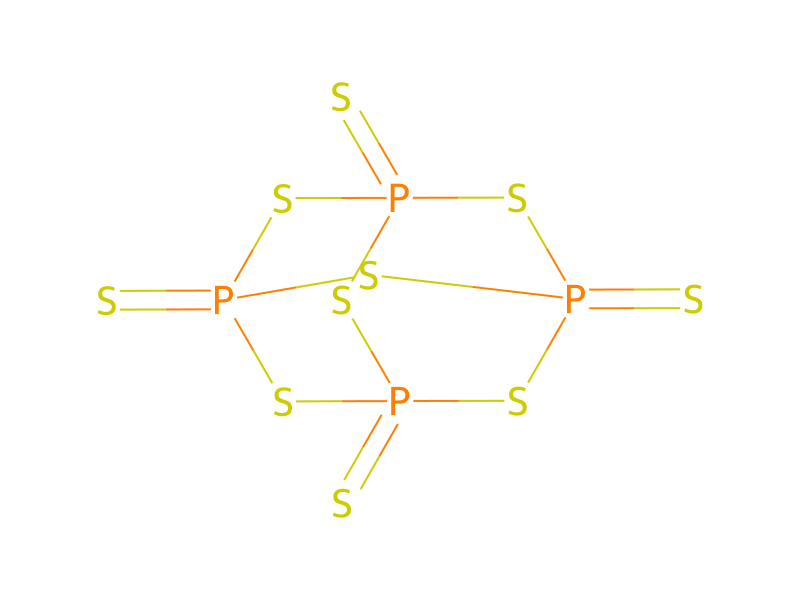
[C:1]([C:3](O)([C:5]1[CH:10]=[CH:9][C:8]([CH2:11][CH:12]([CH3:14])[CH3:13])=[CH:7][CH:6]=1)[CH3:4])#[N:2].P12(SP3(SP(SP(S3)(S1)=S)(=S)S2)=S)=S.P12SP3(SP(SP(S3)(S1)=S)(=S)S2)=S>C1(C)C=CC=CC=1>[C:1]([CH:3]([C:5]1[CH:6]=[CH:7][C:8]([CH2:11][CH:12]([CH3:14])[CH3:13])=[CH:9][CH:10]=1)[CH3:4])#[N:2].[CH2:11]([C:8]1[CH:7]=[CH:6][C:5]([C:3](=[CH2:4])[C:1]#[N:2])=[CH:10][CH:9]=1)[CH:12]([CH3:14])[CH3:13]Participants
6



Conditions
- Temperature
- 85 °C
Procedure
A crude solution of 410 mg (2.0 mmol) of 1-cyano-1-hydroxy-1-(4-isobutylphenyl)ethane (IBACH) in 5 mL of toluene was treated under nitrogen with 450 mg (1.0 mmol) of a finely-ground commercial phosphorus pentasulfide which is a mixture of tetraphosphorus decasulfide and tetraphosphorus nonasulfide. The reaction mixture was stirred well and heated in an 85° C. bath for one hour. GC analysis of the crude reaction product indicated that the reaction resulted in the formation of 1-cyano-1-(4-isobutylphenyl)ethane (PN) and 2-(4-isobutylphenyl)acrylonitrile (UN) in a ratio of 2/1.
Workup
- customGC analysis of the crude reaction product
Sources & evidence
- ORD record
- ord-73bc2067b2d44290b2659aad313c6a6a
- Source dataset
- uspto-grants-1990_08
- Patent number
- US04952718
Reaction notes
Loading…