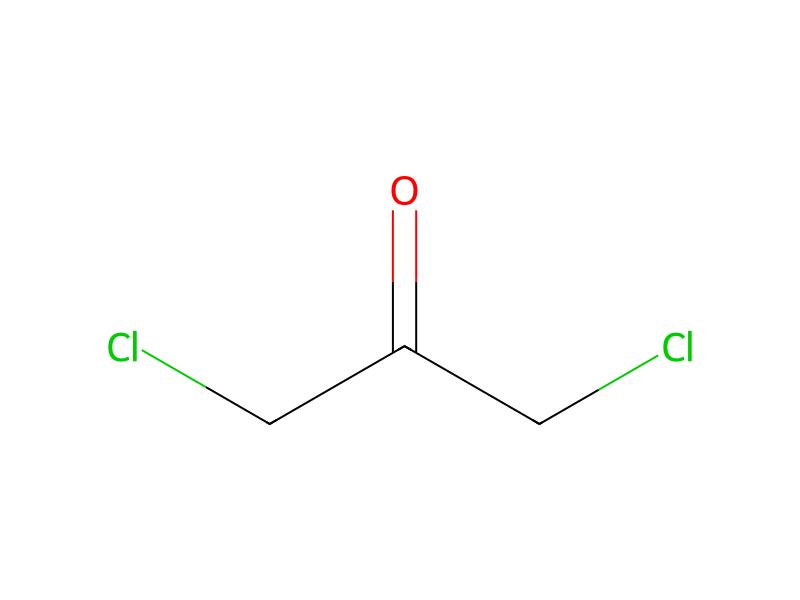
1,3-Dichloroacetone → HCID 68503221, compound
Reaction equation

[Cl:1][CH2:2][CH2:3][CH2:4][O:5][C:6]1[CH:14]=[CH:13][C:9]([C:10]([NH2:12])=[O:11])=[C:8]([F:15])[CH:7]=1.[Cl:16][CH2:17][C:18]([CH2:20]Cl)=O>C(#N)CC>[Cl:16][CH2:17][C:18]1[N:12]=[C:10]([C:9]2[CH:13]=[CH:14][C:6]([O:5][CH2:4][CH2:3][CH2:2][Cl:1])=[CH:7][C:8]=2[F:15])[O:11][CH:20]=1Participants
4
Reactant 2

Product 1

Reagents, catalysts & solvents 1

Conditions
- Temperature
- 100 °C
Procedure
A mixture of 4-(3-chloropropoxy)-2-fluorobenzamide i82 (0.41 g, 1.75 mmol, 1 eq) and 1,3-dichloroacetone (0.49 g, 3.85 mmol, 2.2 eq) in propionitrile (9 ml) is stirred at 100° C. for 60 h. The mixture is then concentrated under vacuum, taken up in dichloromethane, and washed with water. The organic phase is dried over magnesium sulfate and concentrated under reduced pressure. The residue is purified by chromatography over silicagel (eluent: dichloromethane) to afford 0.23 g of 4-(chloromethyl)-2-[4-(3-chloropropoxy)-2-fluorophenyl]-1,3-oxazole i84.
Workup
- concentrationThe mixture is then concentrated under vacuum
- washwashed with water
- dry with materialThe organic phase is dried over magnesium sulfate
- concentrationconcentrated under reduced pressure
- customThe residue is purified by chromatography over silicagel (eluent: dichloromethane)
Sources & evidence
- ORD record
- ord-27f1f66004f9426986bd62f9d4852ae5
- Source dataset
- uspto-grants-2010_09
- Patent number
- US07790720B2
Reaction notes
Loading…