Acetamide → N-(3,4-Dimethoxyphenyl)acetamide
Reaction equation

[NH2:1][C:2]1[CH:3]=[C:4]([O:10][CH3:11])[C:5]([O:8][CH3:9])=[CH:6][CH:7]=1.[C:12](OC(=O)C)(=[O:14])[CH3:13].C(N)(=O)C>C(O)(=O)C>[C:12]([NH:1][C:2]1[CH:3]=[C:4]([O:10][CH3:11])[C:5]([O:8][CH3:9])=[CH:6][CH:7]=1)(=[O:14])[CH3:13]Participants
Reactant 3
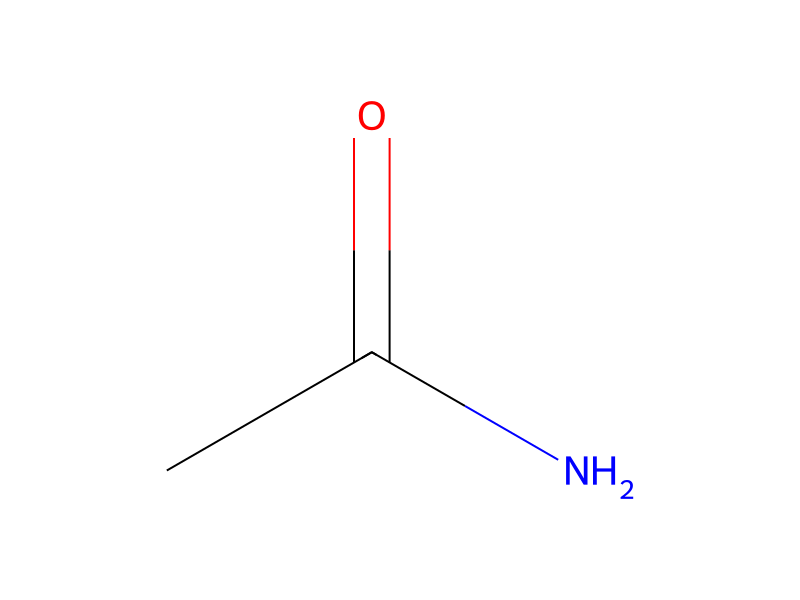

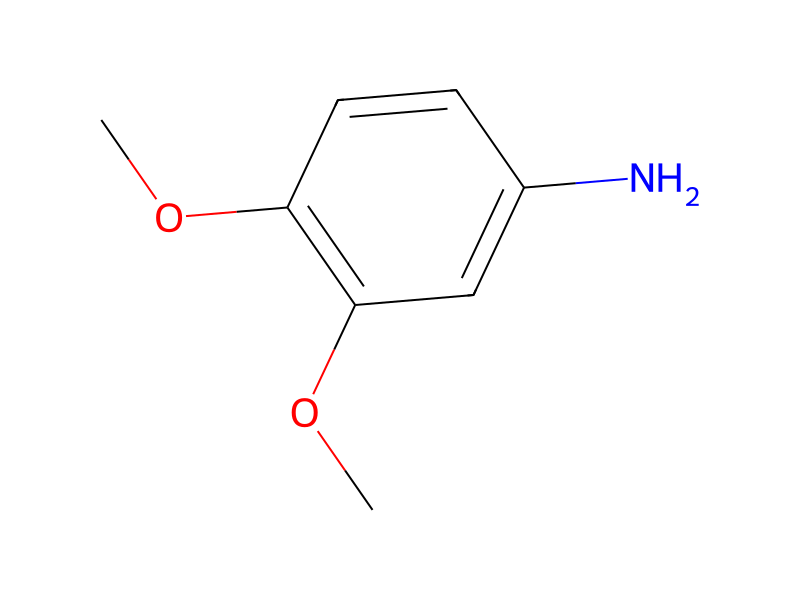
Product 1

Reagents, catalysts & solvents 1

Conditions
- Temperature
- 55 °C
Procedure
In general, the reaction schemes 1 and 2 shown above, may be applied to this specific synthetic sequence. Beginning with Scheme 2, 10 grams (65.28 mmoles) of 4-amino veratrole (Scheme 2, structure VII, a.k.a. 3,4-dimethoxyaniline, Aldrich Chemical Co.) was dissolved in 20 grams of glacial acetic acid in a 100 mL round bottomed flask. To the flask was added 22 grams of ice followed by the dropwise addition of 1.1 equivalents of acetic anhydride (7.3 grams, Aldrich Chemical Co.) with stirring via an addition funnel over a 30 minute time interval. The reaction to make the acetamide intermediate of 4-aminoveratrole occurred with the evolution of heat after which the reaction flask was placed into a water bath and heated for an hour at 55° C. The stirring was continued overnight. The 4-acetamidoveratrole product was not isolated, but the next reaction step was continued by the addition of 5.9 grams of nitric acid in 8 mL of water and the reaction was cooled to 15° C. in an ice-water bath. As the nitration reaction preceded the purple colored reaction solution turned to a red-orange color. The reaction flask was cooled in a refrigerator overnight and a red-orange powder precipitated from the solution.
Workup
- customIn general, the reaction schemes 1 and 2
- customThe reaction
- temperatureof heat after which the reaction flask
- customwas placed into a water bath
- waitThe stirring was continued overnight
Sources & evidence
- ORD record
- ord-2af2dcdf14c54b83aa916a9f8ca623b8
- Source dataset
- uspto-grants-2010_09
- Patent number
- US07803359B1
Reaction notes
Loading…