Quinuclidine → Benzyl-(4-isothiocyanatobenzyl)dimethyl-ammonium bromide
Reaction equation

[Br:1]CCCN=C=S.Br[CH2:9][C:10]1[CH:15]=[CH:14][C:13]([N:16]=[C:17]=[S:18])=[CH:12][CH:11]=1.N12CCC(CC1)CC2.[CH3:27][N:28]([CH2:30][C:31]1[CH:36]=[CH:35][CH:34]=[CH:33][CH:32]=1)[CH3:29]>>[Br-:1].[CH2:30]([N+:28]([CH2:9][C:10]1[CH:15]=[CH:14][C:13]([N:16]=[C:17]=[S:18])=[CH:12][CH:11]=1)([CH3:29])[CH3:27])[C:31]1[CH:36]=[CH:35][CH:34]=[CH:33][CH:32]=1Participants
5



Procedure
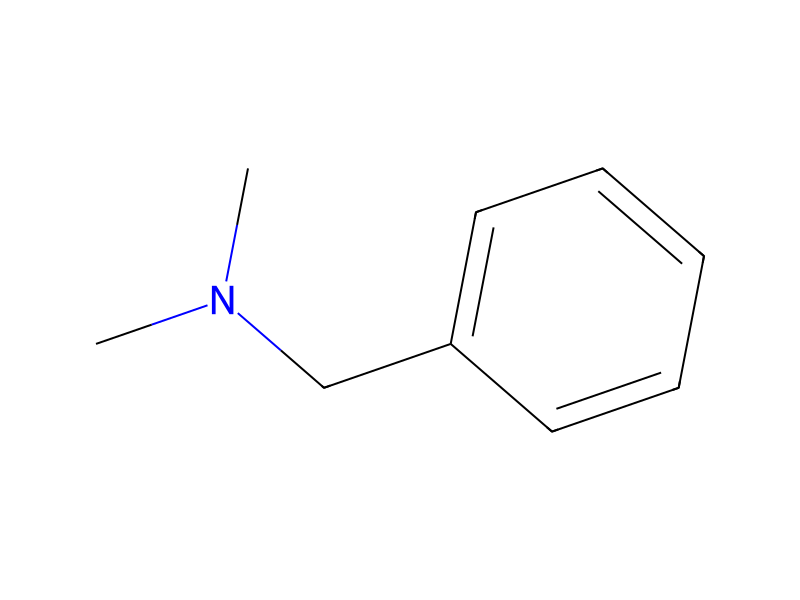
The procedure in the step a in Example 9 was followed except that instead of 3-bromopropyl isothiocyanate, 4-(bromomethyl)phenyl isothiocyanate (is-14 mentioned earlier) was used and instead of quinuclidine, N,N-dimethylbenzylamine (ta-32 mentioned earlier) was used to obtain the title compound.
Sources & evidence
- ORD record
- ord-8fd86c2cb58e469fb0c5a3726afcb34e
- Source dataset
- uspto-grants-2010_09
- Patent number
- US07803792B2
Reaction notes
Loading…