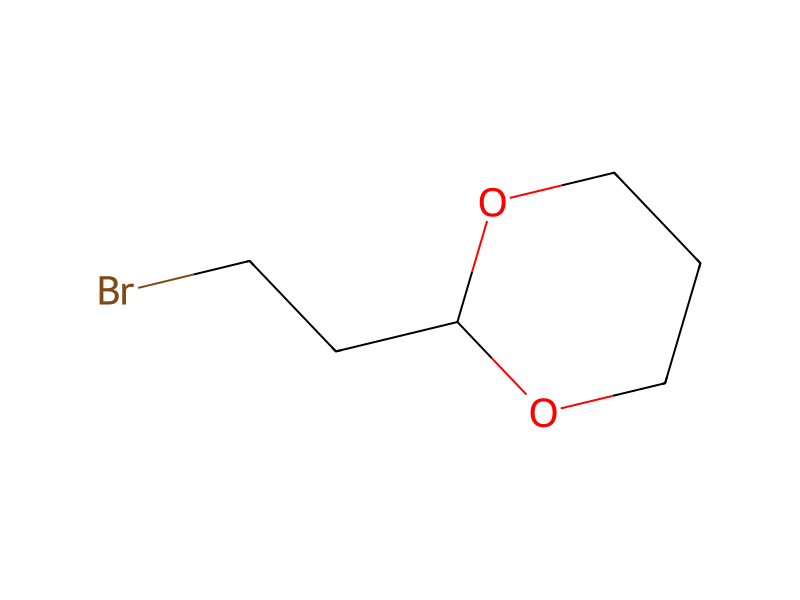
1,3-Dioxane, 2-(2-bromoethyl)- → HCID 70263640, compound
Reaction equation

[CH3:1][O:2][C:3]1[CH:16]=[CH:15][C:6]([CH:7]=[CH:8][C:9]2[CH:14]=[CH:13][N:12]=[CH:11][CH:10]=2)=[CH:5][CH:4]=1.[Br:17][CH2:18][CH2:19][CH:20]1[O:25][CH2:24][CH2:23][CH2:22][O:21]1>>[Br-:17].[O:21]1[CH2:22][CH2:23][CH2:24][O:25][CH:20]1[CH2:19][CH2:18][N+:12]1[CH:11]=[CH:10][C:9]([CH:8]=[CH:7][C:6]2[CH:5]=[CH:4][C:3]([O:2][CH3:1])=[CH:16][CH:15]=2)=[CH:14][CH:13]=1Participants
3


Procedure
By the procedure described in Ex. 8, 4-(4-methoxystyryl) pyridine and 2-(2-bromoetyl) 1,3-dioxane were reacted to obtain N-[2-(1,3-dioxane-2-yl) ethyl]-4-(4methoxystyryl) pyridinium bromide.
Sources & evidence
- ORD record
- ord-9fa09f3f5d0f4eafaa547c5cf487482c
- Source dataset
- uspto-grants-1996_04
- Patent number
- US05506089
Reaction notes
Loading…