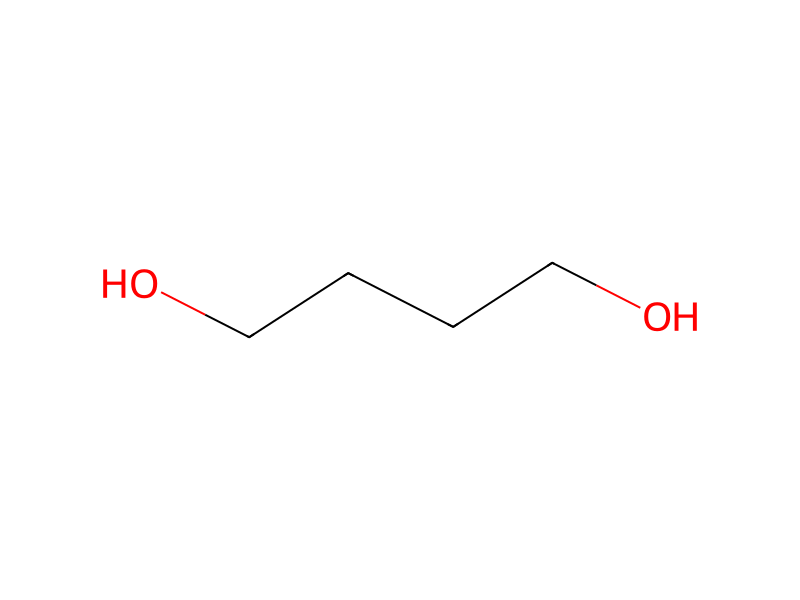
1,4-Butanediol → 4-(3-Tert-butyl-5-methyl-4-hydroxyphenyl)butanol
Reaction equation

[OH-].[K+].[C:3]([C:7]1[CH:12]=[CH:11][CH:10]=[C:9]([CH3:13])[C:8]=1[OH:14])([CH3:6])([CH3:5])[CH3:4].[CH2:15](O)[CH2:16][CH2:17][CH2:18][OH:19]>>[C:3]([C:7]1[CH:12]=[C:11]([CH2:15][CH2:16][CH2:17][CH2:18][OH:19])[CH:10]=[C:9]([CH3:13])[C:8]=1[OH:14])([CH3:6])([CH3:5])[CH3:4]Participants



Conditions
- Temperature
- 235 °C
Procedure
50 g of potassium hydroxide, 316 g of 2-tert-butyl-6-methylphenol and 866 g of 1,4-butanediol are initially introduced into an autoclave. After introducing nitrogen gas, the autoclave is closed and the mixture is heated at 235° C. (4 bar) for 6 hours, with stirring; a further rise in pressure as a consequence of the reaction is prevented by blowing of gas. When the reaction is complete, the reaction mixture is cooled to 80° C. and the autoclave is emptied. Excess butanediol is removed by distillation. The distillation residue is poured into 11 of water and 500 ml of toluene. The organic phase is then washed with water until neutral and the toluene is stripped off by applying a vacuum. The remaining residue (310 g) contains 68-70% of the title product of the formula ##STR25##
Workup
- additionAfter introducing nitrogen gas
- customthe autoclave is closed
- temperaturethe reaction mixture is cooled to 80° C.
- customExcess butanediol is removed by distillation
- additionThe distillation residue is poured into 11 of water and 500 ml of toluene
- washThe organic phase is then washed with water until neutral and the toluene
Sources & evidence
- ORD record
- ord-0c75f0beb66a47fda5b373700f6c334a
- Source dataset
- uspto-grants-1996_04
- Patent number
- US05510402
Reaction notes
Loading…