3-Cyano-2,6-dichloro-4-methylpyridine → 4-Methyl-3-cyanopyridine
Reaction equation

Cl[C:2]1[C:7]([C:8]#[N:9])=[C:6]([CH3:10])[CH:5]=[C:4](Cl)[N:3]=1.C([O-])(=O)C.[Na+]>CO.[Pd](Cl)Cl>[C:8]([C:7]1[CH:2]=[N:3][CH:4]=[CH:5][C:6]=1[CH3:10])#[N:9]Participants
5
Reactant 2


Product 1

Reagents, catalysts & solvents 2

Procedure
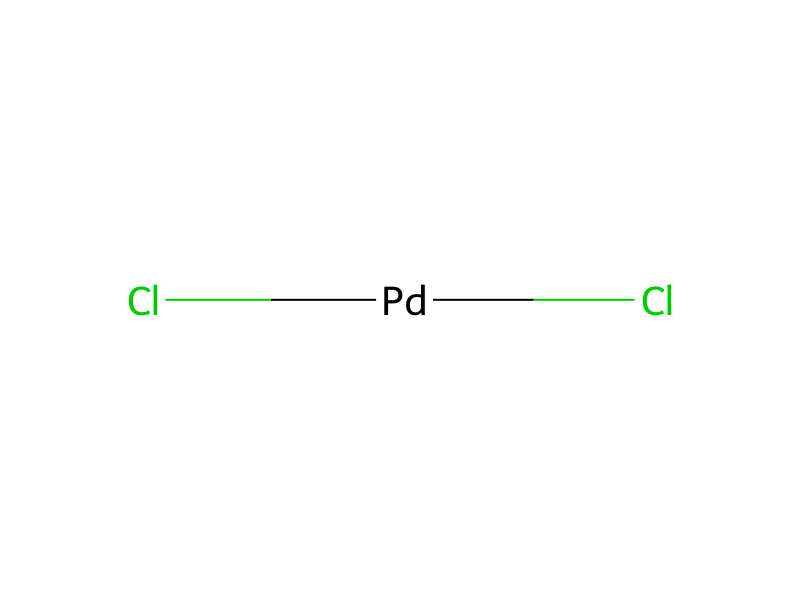
A mixture of 2,6-dichloro-3-cyano-4-methylpyridine (47 g, 0.25 mol), sodium acetate (41.2 g, 0.5 mol), and palladium (II) chloride (0.5 g) in 220 mL of methanol was hydrogenated on a Parr apparatus under 50 PSI (initial pressure). When the uptake ceased the catalyst was filtered (solka floc) and the filtrate concentrated in vacuo. The crude residue was distilled under vacuum through a Vigreaux column and the product collected at 68°-72° C./2 mm (25.3 g, 85%, as a clear liquid).
Workup
- filtrationwas filtered (solka floc)
- concentrationthe filtrate concentrated in vacuo
- distillationThe crude residue was distilled under vacuum through a Vigreaux column
- customthe product collected at 68°-72° C./2 mm (25.3 g, 85%
Sources & evidence
- ORD record
- ord-743036d1f3734b5e833267f113aab653
- Source dataset
- uspto-grants-1989_08
- Patent number
- US04859671
Reaction notes
Loading…