3-Pyridinemethanamine → Pyrinuron
Reaction equation

[N+:1]([C:4]1[CH:9]=[CH:8][C:7]([N:10]=[C:11]=[O:12])=[CH:6][CH:5]=1)([O-:3])=[O:2].[NH2:13][CH2:14][C:15]1[CH:16]=[N:17][CH:18]=[CH:19][CH:20]=1>C1(C)C=CC=CC=1>[N:17]1[CH:18]=[CH:19][CH:20]=[C:15]([CH2:14][NH:13][C:11]([NH:10][C:7]2[CH:6]=[CH:5][C:4]([N+:1]([O-:3])=[O:2])=[CH:9][CH:8]=2)=[O:12])[CH:16]=1Participants
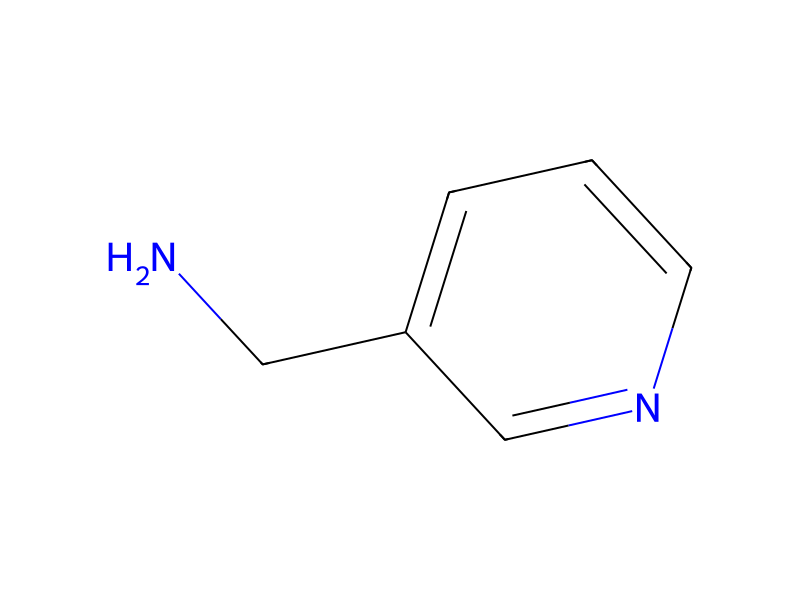
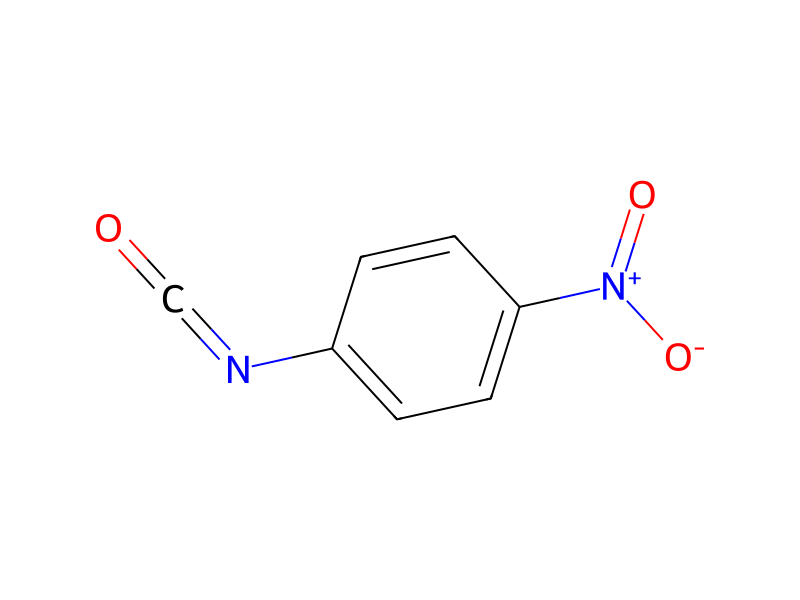
Reactant 2
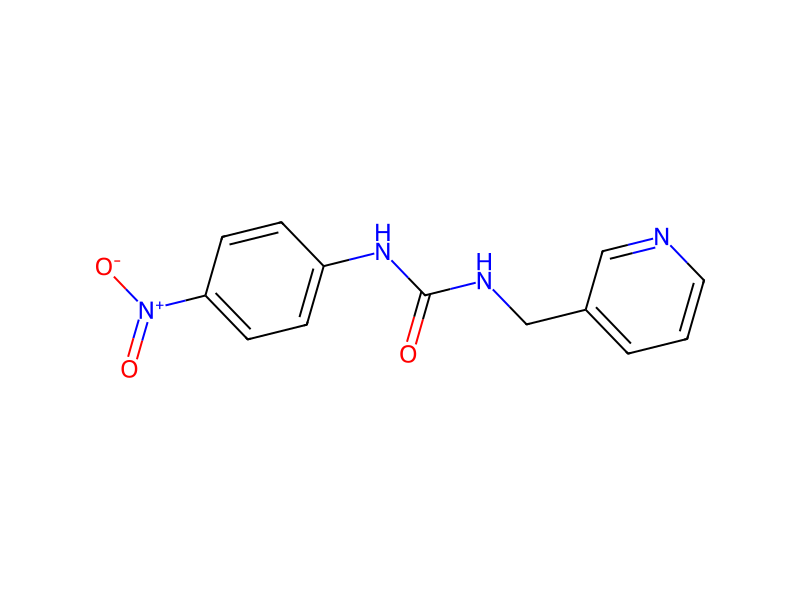
Product 1
Reagents, catalysts & solvents 1

Procedure
A solution of 415 g. of crude p-nitrophenyl isocyanate in 4.5 l. of toluene was stirred at room temperature. The mixture was filtered and 35 g. of insoluble impurity removed. The material in solution was 380 g. (2.32 mol) of purified p-nitrophenyl isocyanate. The solution was stirred under dry nitrogen, and 3-(aminomethyl)pyridine (250 g., 2.32 mol) was added dropwise. An exotherm to 40° C. was noted. The resulting thick suspension was stirred overnight and then vacuum filtered. The product was washed with hexane and dried in a vacuum oven at 60° C. overnight to give 610.7 g. melting at 220°-221.5° C. The product was a 98% yield of 1-(3-pyridylmethyl)-3-(4-nitrophenyl)urea. This product after recrystallization from 2-methoxyethanol melted with decomposition at 223°-225° C.
Workup
- filtrationThe mixture was filtered
- customof insoluble impurity removed
- customto 40° C.
- stirringThe resulting thick suspension was stirred overnight
- filtrationvacuum filtered
- washThe product was washed with hexane
- customdried in a vacuum oven at 60° C. overnight
- customto give 610.7 g
Sources & evidence
- ORD record
- ord-e28c4fc4d8bb4d3a9593d37a0004b69a
- Source dataset
- uspto-grants-1976_11
- Patent number
- US03994905
Reaction notes
Loading…