Cyclohexanol → 1-Aminoanthraquinone
Reaction equation

[N+:1]([C:4]1[CH:17]=[CH:16][CH:15]=[C:14]2[C:5]=1[C:6](=[O:19])[C:7]1[CH2:8][CH2:9][CH2:10][CH2:11][C:12]=1[C:13]2=[O:18])([O-])=O.C1(O)CCCCC1.[H][H]>[Ni]>[NH2:1][C:4]1[C:5]2[C:6](=[O:19])[C:7]3[C:12](=[CH:11][CH:10]=[CH:9][CH:8]=3)[C:13](=[O:18])[C:14]=2[CH:15]=[CH:16][CH:17]=1Participants
5
Reactant 3
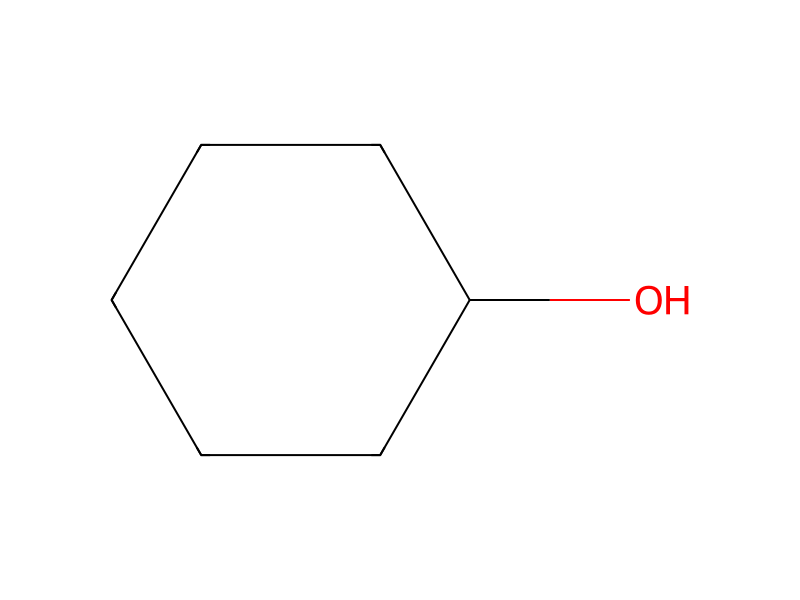


Product 1

Reagents, catalysts & solvents 1

Conditions
- Temperature
- 100 °C
Procedure
To a mixture of 12.8 grams of 5-nitrotetrahydroanthraquinone and 170 grams of cyclohexanol was added 0.3 gram of a Raney-nickel catalyst. Then, hydrogen was fed into the mixture while agitating at 100° C. for hydrogenation. After hydrogen was absorbed in an amount of 2 mols per mol of the nitro compound, the catalyst was separated by filtration. To the resultant filtrate was added 10 grams of a 20% aqueous sodium hydroxide solution, followed by agitating at 100° C. for 1 hour. Then, the reaction solution was cooled to 10° C. to precipitate crystals which were separated by filtration, washed with water and dried to obtain 9.2 grams of 1-aminoanthraquinone having a purity of 98%.
Workup
- customAfter hydrogen was absorbed in an amount of 2 mols per mol of the nitro compound
- customthe catalyst was separated by filtration
- additionTo the resultant filtrate was added 10 grams of a 20% aqueous sodium hydroxide solution
- stirringby agitating at 100° C. for 1 hour
- temperatureThen, the reaction solution was cooled to 10° C.
- customto precipitate crystals which
- customwere separated by filtration
- washwashed with water
- customdried
Sources & evidence
- ORD record
- ord-eb559aae455e48709e61281e63992933
- Source dataset
- uspto-grants-1976_11
- Patent number
- US03994932
Reaction notes
Loading…