Terephthalic Acid → bis(hydroxybutyl) terephthalate
Reaction equation

[CH2:1]([OH:6])[CH2:2][CH2:3][CH2:4][OH:5].[C:7]([OH:18])(=O)[C:8]1[CH:16]=[CH:15][C:11]([C:12]([OH:14])=[O:13])=[CH:10][CH:9]=1>>[C:12]([O:14][CH2:1][CH2:2][CH2:3][CH2:4][OH:5])(=[O:13])[C:11]1[CH:10]=[CH:9][C:8]([C:7]([O:5][CH2:4][CH2:3][CH2:2][CH2:1][OH:6])=[O:18])=[CH:16][CH:15]=1Participants

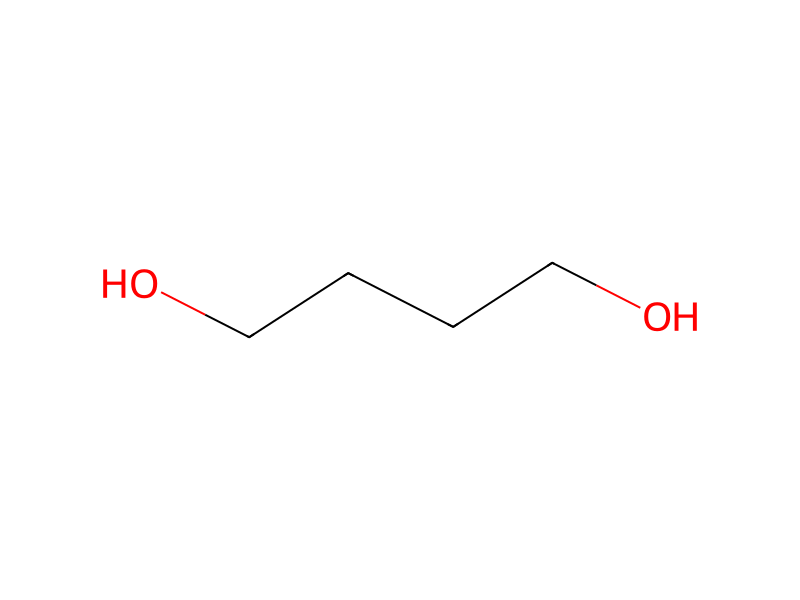

Procedure
In order to produce polyesters derived from 1,4-butanediol such as polybutyleneterephthalate, the reaction of one mole of terephthalic acid and/or a dialkyl ester with 1.1-2.2 moles of 1,4-butanediol is conducted at about 150°-230° C. for about 0.5-5 hours to produce bis(hydroxybutyl) terephthalate and oligomers thereof. Thereafter, the reaction is continued, heating at a temperature of about 230°-260° C. under a gradually reduced pressure of about 0.05-10 mmHg, until a polyester having a suitable degree of polymerization is produced. Depending upon the progress of the polycondensation, an excess of 1,4-butanediol is distilled out from the reaction system. It is quite important to recover and to reuse the distilled 1,4-butanediol mixture in the polycondensation system in order to lower the cost of the production of the polyester.
Sources & evidence
- ORD record
- ord-b4e035ebd17f419bbb8705288c091cb1
- Source dataset
- uspto-grants-1980_12
- Patent number
- US04239882
Reaction notes
Loading…