2-(Tributylstannyl)pyrazine → 2-Cyclopropyl-7-fluoro-5-methyl-6-(pyrazin-2-yl)-1,3-benzoxazole-4-carbonitrile
Reaktionsgleichung
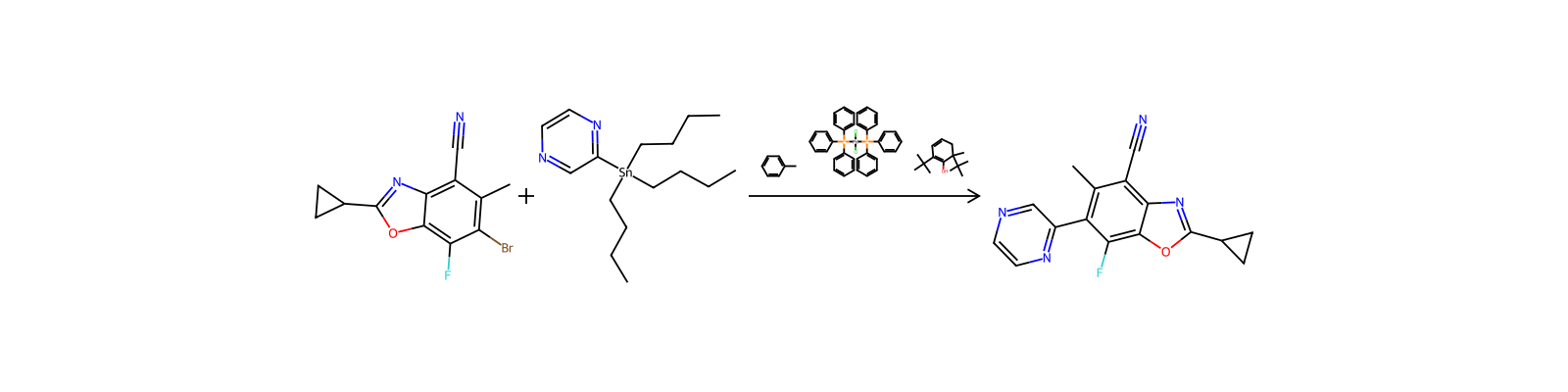
Br[C:2]1[C:3]([F:17])=[C:4]2[O:8][C:7]([CH:9]3[CH2:11][CH2:10]3)=[N:6][C:5]2=[C:12]([C:15]#[N:16])[C:13]=1[CH3:14].C([Sn](CCCC)(CCCC)[C:23]1[CH:28]=[N:27][CH:26]=[CH:25][N:24]=1)CCC>C1(C)C=CC=CC=1.Cl[Pd](Cl)([P](C1C=CC=CC=1)(C1C=CC=CC=1)C1C=CC=CC=1)[P](C1C=CC=CC=1)(C1C=CC=CC=1)C1C=CC=CC=1.C(C1(C)C(O)=C(C(C)(C)C)C=CC1)(C)(C)C>[CH:9]1([C:7]2[O:8][C:4]3[C:5](=[C:12]([C:15]#[N:16])[C:13]([CH3:14])=[C:2]([C:23]4[CH:28]=[N:27][CH:26]=[CH:25][N:24]=4)[C:3]=3[F:17])[N:6]=2)[CH2:11][CH2:10]1Komponenten
Edukt 2


Produkt 1

Reagenzien, Katalysatoren, Lösungsmittel 3

Versuchsvorschrift
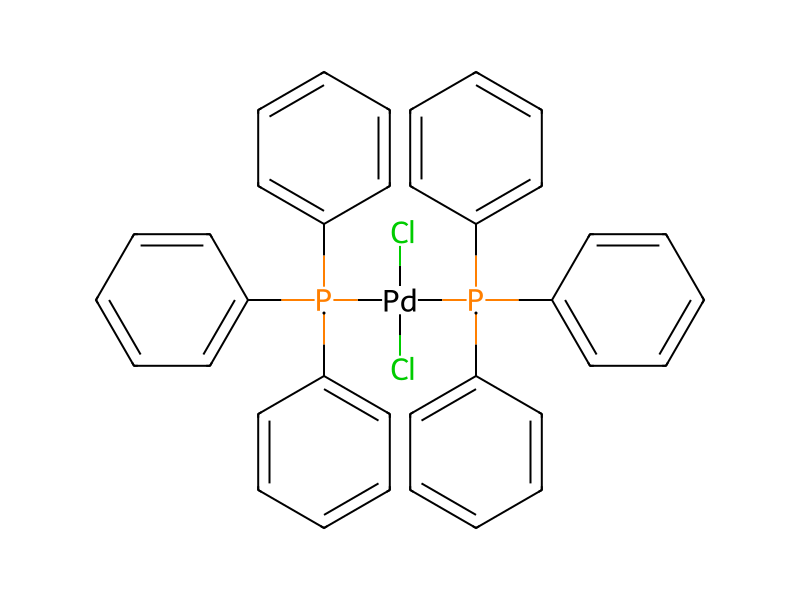
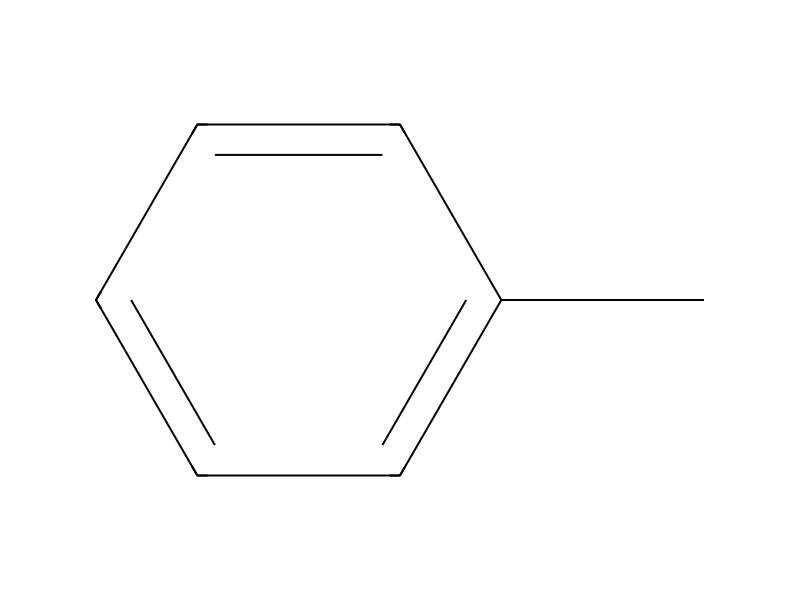
6-Bromo-2-cyclopropyl-7-fluoro-5-methyl-1,3-benzoxazole-4-carbonitrile (I-77) (200 mg, 0.68 mmol) was dissolved in toluene (4 ml), then 2-tributylstannylpyrazine (300 mg, 0.81 mmol) and 2,6-di-tert-butylcresol (2 mg) and bis(triphenylphosphine)palladium(II) dichloride (24 mg, 0.03 mmol) were added, followed by heating under reflux for 15 hours under nitrogen atmosphere. The reaction liquid was cooled, the insoluble matter was separated by filtration through Celite, the solvent was concentrated under reduced pressure. The resulting residue was subjected to silica gel column chromatography, followed by removing tin-derived side products with n-hexane and by elution with a mixed solvent of n-hexane/ethyl acetate (3:1, v/v) to obtain 2-cyclopropyl-7-fluoro-5-methyl-6-(pyrazin-2-yl)-1,3-benzoxazole-4-carbonitrile (158 mg, 79%) as a yellow white solid. This was dissolved in dimethyl sulfoxide (3.2 ml), triethylamine (189 μl, 1.34 mmol) and (3S)-3-(dimethylamino)pyrrolidine (102 μl, 0.81 mmol) were added, followed by stirring at 90° C. under nitrogen atmosphere for 14 hours. After cooling to room temperature, ethyl acetate was added, followed by fractionation with water. The organic layer was washed with saturated brine, and dried over anhydrous sodium sulfate. The solvent was evaporated away, the resulting residue was subjected to silica gel column chromatography and eluted with a mixed solvent of chloroform/methanol (20:1, v/v) to obtain the entitled compound (121 mg, 58%) as a pale brown solid.
Aufarbeitung
- temperatureby heating
- temperatureunder reflux for 15 hours under nitrogen atmosphere
- customThe reaction liquid
- temperaturewas cooled
- customthe insoluble matter was separated by filtration through Celite
- concentrationthe solvent was concentrated under reduced pressure
- customby removing tin-
- washby elution with a mixed solvent of n-hexane/ethyl acetate (3:1
Quellen und Nachweise
- ORD-Eintrag
- ord-4697f8b5447745f49a73e2f858210b50
- Quelldatensatz
- uspto-grants-2010_06
- Patentnummer
- US07737166B2
Notizen zur Reaktion
Wird geladen…