3,4-dihydro-2H-pyran → 2-(3-Bromophenoxy)tetrahydro-2H-pyran
Reaction equation

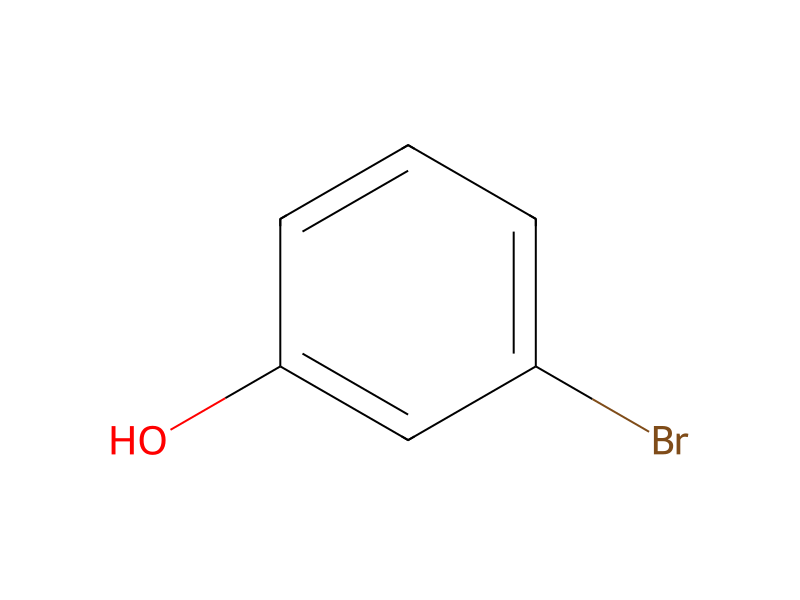
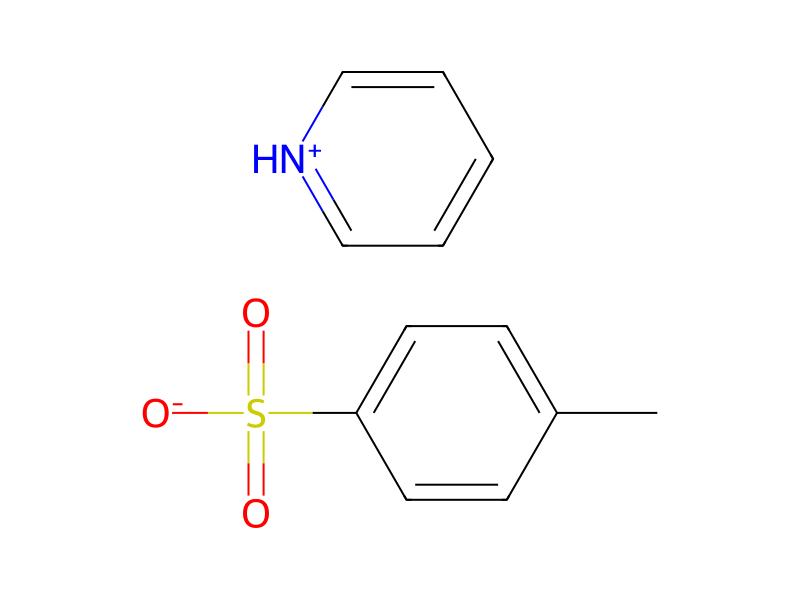
[Br:1][C:2]1[CH:3]=[C:4]([OH:8])[CH:5]=[CH:6][CH:7]=1.C1(C)C=CC(S([O-])(=O)=O)=CC=1.[NH+]1C=CC=CC=1.[O:26]1[CH:31]=[CH:30][CH2:29][CH2:28][CH2:27]1>ClCCl>[Br:1][C:2]1[CH:3]=[C:4]([O:8][CH:27]2[CH2:28][CH2:29][CH2:30][CH2:31][O:26]2)[CH:5]=[CH:6][CH:7]=1Participants
Reactant 3

Product 1

Reagents, catalysts & solvents 1

Procedure
To a solution of 8.80 g (50.9 mmol) of 3-bromophenol (distilled) and 1.28 g (5.1 mmol) of pyridinium p-toluenesulfonate in 50 ml of dichloromethane was added 6.42 g (7.0 ml, 76.3 mmol) of 3,4-dihydro-2H-pyran. The resulting clear solution was stirred at room temperature for 24 hours, partitioned between 200 ml of water and 400 ml of hexane, and the layers were separated. The organic phase was washed with 100 ml of water, 50 ml of 1N aqueous NaOH solution and 100 ml of brine solution, dried over K2CO3, filtered and concentrated in vacuo to a clear, slightly yellow oil. Purification by flash chromatography (silica, 5% ethyl acetate in hexane) yielded the title compound as a white solid. PMR (CDCl3):d 1.55-2.04 (6H, m), 3.55-3.65 (1H, m), 3.8-3.95 (1H, m), 5.40 (1H, t, J=2.9 Hz), 6.96-7.00 (1H, m), 7.09-7.17 (2H, m), 7.22-7.24 (1H, m).
Workup
- custompartitioned between 200 ml of water and 400 ml of hexane
- customthe layers were separated
- washThe organic phase was washed with 100 ml of water, 50 ml of 1N aqueous NaOH solution and 100 ml of brine solution
- dry with materialdried over K2CO3
- filtrationfiltered
- concentrationconcentrated in vacuo to a clear, slightly yellow oil
- customPurification by flash chromatography (silica, 5% ethyl acetate in hexane)
Sources & evidence
- ORD record
- ord-dcf3cbb8821b4546af5f6724c05086ca
- Source dataset
- uspto-grants-1996_07
- Patent number
- US05534641
Reaction notes
Loading…