Dichloromethane → N,N'-Dicyclohexylurea
Reaction equation

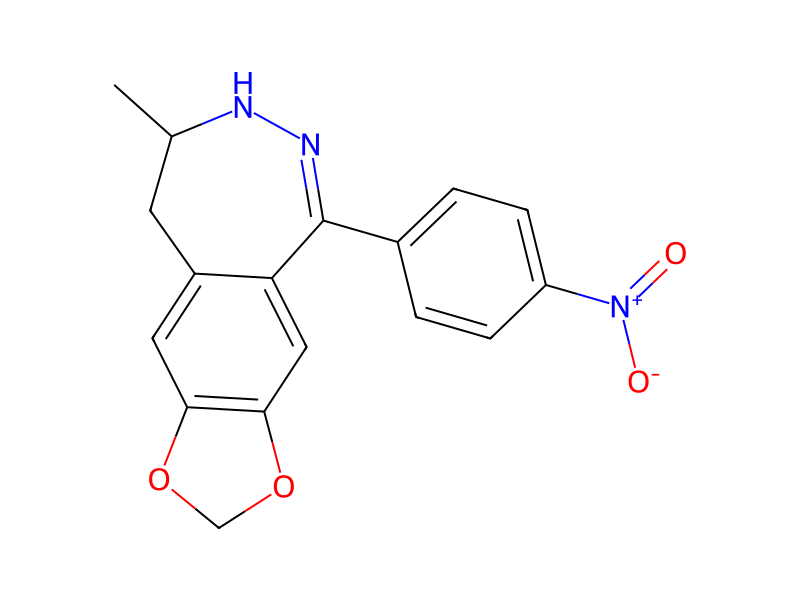
[N+](C1C=CC(C2C3C=C4OCOC4=CC=3CC(C)NN=2)=CC=1)([O-])=[O:2].ClCCl.[CH:28]1([N:34]=[C:35]=[N:36][CH:37]2[CH2:42][CH2:41][CH2:40][CH2:39][CH2:38]2)[CH2:33][CH2:32][CH2:31][CH2:30][CH2:29]1.CCCCC(O)=O>>[CH:37]1([NH:36][C:35]([NH:34][CH:28]2[CH2:29][CH2:30][CH2:31][CH2:32][CH2:33]2)=[O:2])[CH2:42][CH2:41][CH2:40][CH2:39][CH2:38]1Participants




Conditions
- Temperature
- 25 °C
Procedure
To a solution of a.2.5. g (7.68 mmol) portion of the product of Example 26 in 40 ml of anhydrous dichloromethane 4.75 g (23 mmol) of dicyclohexylcarbodiimide and 2.88 g (23 mmol) of n-valeric acid were added and the reaction mixture was maintained at 25° C. under intermittent stirring for 24 hours. Then the N,N'-dicyclohexylurea formed as by-product was filtered, the filtrate was evaporated under reduced pressure, the residue was mixed with 2×40 ml of distilled water, decanted and the wet product was left to solidify under 50 ml of 50% ethanol. The solid compound was filtered, washed with 2×10 ml of 50% ethanol and dried at 80° C. The raw product obtained was recrystallized from 24 ml of ethanol and the crystals were dried at 100° C. to yield 2.20 g (70%) of the aimed product as a yellow powder, m.p.: 145°-147° C.
Sources & evidence
- ORD record
- ord-922a295a519d4b1e99ef9df7a6f08f1d
- Source dataset
- uspto-grants-1996_07
- Patent number
- US05536832
Reaction notes
Loading…