Sodium Hydroxide → Acetate
Reaction equation

[C:1]([O-:6])(=[O:5])[C@H:2]([CH3:4])[OH:3].[Na+].CCCCCCCCCCCCC[N+](CC1C=CC=CC=1)(C)C.[Cl-].[OH-].[Na+]>>[C:1]([O-:6])(=[O:5])[C:2]([CH3:4])=[O:3].[C:1]([O-:6])(=[O:5])[CH3:2]Participants



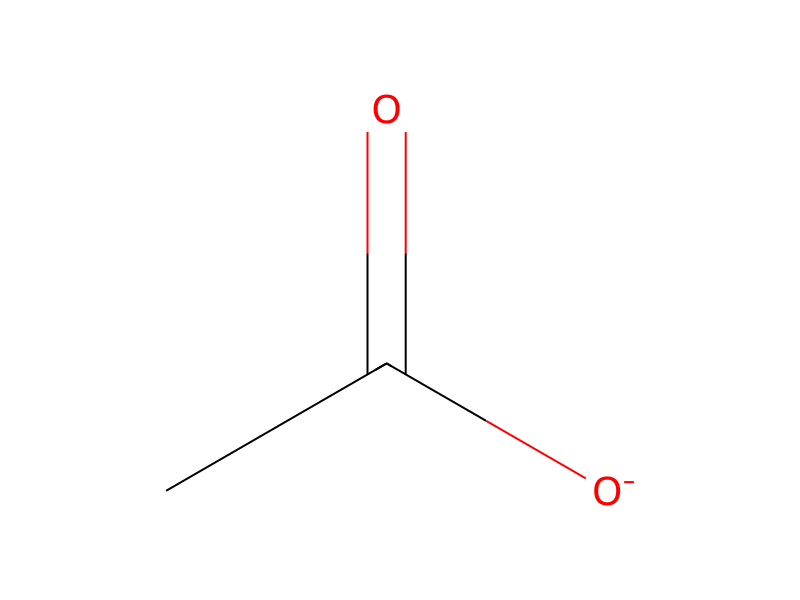
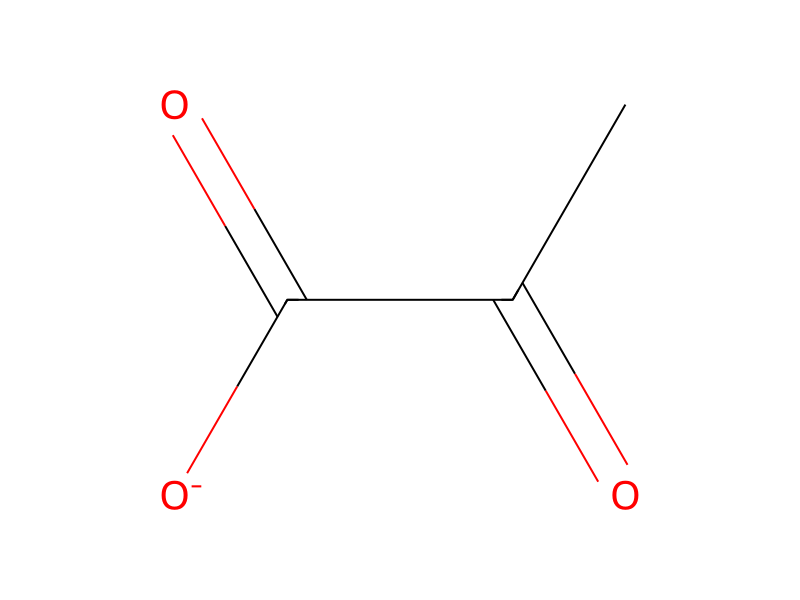
Conditions
- Temperature
- 5 °C
Procedure
A 300-mL EZE-Seal stirred autoclave reactor equipped with Dispersimax Impeller (Autoclave Engineers) was charged with 100 mL of a solution containing sodium L-lactate (5.50 g, 0.50M) . To the reactor was then added 6.70 g (wet weight) of Pichia pastoris transformant strain GS115-MSP10 (6.70 IU/mL glycolate oxidase and 11,770 IU/mL catalase) which had been permeabilized by treatment with 0.1% benzalkonium chloride ("BARQUAT" MB-50), and the mixture adjusted to pH 9.0 with 50% NaOH and cooled to 5° C. The reactor purged with oxygen, then the mixture was stirred at 750 rpm, which bubbled oxygen through the mixture via the action of the turbine impeller, and at 5° C. under 40 psig of oxygen. The reaction was monitored by taking a 0.40 mL aliquot of the reaction mixture at regular intervals, filtering the aliquot using a Millipore Ultrafree-MC 10,000 NMWL Filter Unit, and analyzing the filtrate by HPLC using 0.10M isobutyfic acid added to the sample as internal standard. After 3.0 hours, the HPLC yields of pyruvate and acetate were 99.2% and 1.4%, respectively, and 0.6% lactate remained. The recovered activities of permeabilized-cell glycolate oxidase and catalase were 107% and 106% of their initial values, respectively.
Workup
- customA 300-mL EZE-Seal stirred autoclave reactor equipped with Dispersimax Impeller (Autoclave Engineers)
- customThe reactor purged with oxygen
- custombubbled oxygen through the mixture via the action of the turbine impeller
- customat 5° C.
- filtrationfiltering the aliquot
- filtrationFilter Unit
- additionadded to the sample as internal standard
Sources & evidence
- ORD record
- ord-540496d2cc89427a97c220a13614a879
- Source dataset
- uspto-grants-1996_07
- Patent number
- US05538875
Reaction notes
Loading…