Ammonia → HCID 22117857, compound
Reaction equation

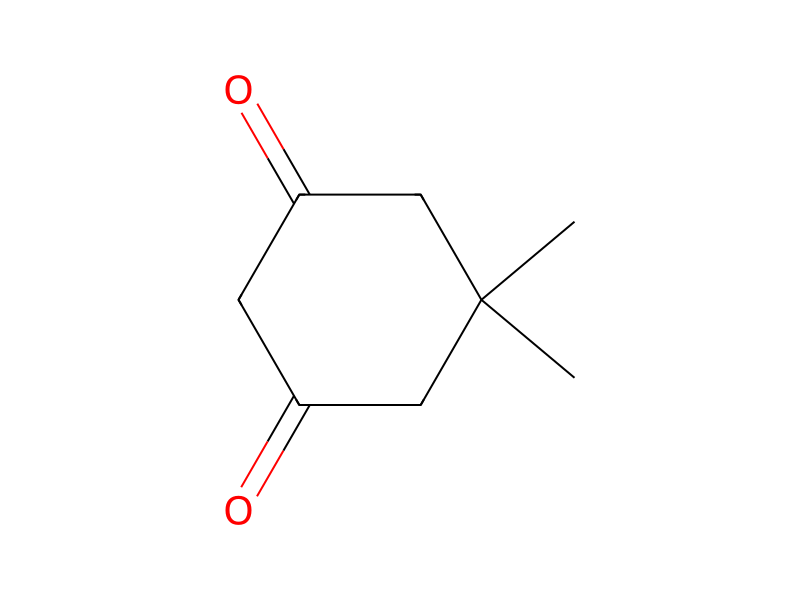
[CH3:1][C:2]1([CH3:10])[CH2:7][C:6](=[O:8])[CH2:5][C:4](=O)[CH2:3]1.[NH3:11].[Br:12][C:13]1[CH:20]=[CH:19][C:16]([CH:17]=O)=[CH:15][C:14]=1[N+:21]([O-:23])=[O:22]>C(O)C>[Br:12][C:13]1[CH:20]=[CH:19][C:16]([CH:17]2[C:5]3[C:6](=[O:8])[CH2:7][C:2]([CH3:10])([CH3:1])[CH2:3][C:4]=3[NH:11][C:4]3[CH2:3][C:2]([CH3:10])([CH3:1])[CH2:7][C:6](=[O:8])[C:5]2=3)=[CH:15][C:14]=1[N+:21]([O-:23])=[O:22]Participants
5
Reactant 3


Product 1

Reagents, catalysts & solvents 1

Procedure
A solution of 1.94 g of 5,5-dimethyl-1,3-cyclohexanedione and 1.5 ml of a 25% aqueous solution of ammonia in 10 ml of absolute ethanol was heated at reflux under an atmosphere of nitrogen for 2 hours. The mixture was cooled to room temperature and 1.588 g of 4-bromo-3-nitrobenzaldehyde were added. The mixture was then heated at reflux for a further 18 hours, cooled and filtered. The residue was washed with 25 ml of cold diethyl ether and crystallized from dimethylformamide/water to give 2.36 g of 9-(4-bromo-3-nitro-phenyl)-3,4,6,7,9,10-hexahydro-3,3,6,6-tetramethyl-1,8(2H,5H)-acridinedione as a yellow crystalline solid of melting point >300° C.
Workup
- temperatureat reflux under an atmosphere of nitrogen for 2 hours
- temperatureThe mixture was then heated
- temperatureat reflux for a further 18 hours
- temperaturecooled
- filtrationfiltered
- washThe residue was washed with 25 ml of cold diethyl ether
- customcrystallized from dimethylformamide/water
Sources & evidence
- ORD record
- ord-9c567afe7aed459f96310deb7983d3cf
- Source dataset
- uspto-grants-1999_10
- Patent number
- US05969139
Reaction notes
Loading…