Pyridine → 4-bromo-N-methoxy-N,3-dimethylbenzamide
Reaction equation

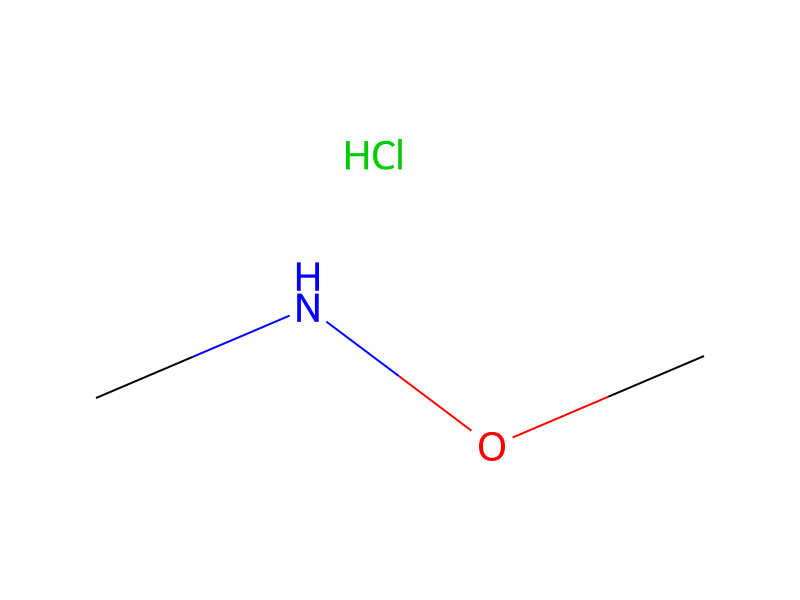
[Br:1][C:2]1[CH:10]=[CH:9][C:5]([C:6](O)=[O:7])=[CH:4][C:3]=1[CH3:11].Cl.[CH3:13][NH:14][O:15][CH3:16].N1C=CC=CC=1.C([O-])([O-])=O.[Na+].[Na+]>S(Cl)(Cl)=O.ClCCl.C(#N)C>[CH3:16][O:15][N:14]([CH3:13])[C:6](=[O:7])[C:5]1[CH:9]=[CH:10][C:2]([Br:1])=[C:3]([CH3:11])[CH:4]=1Participants
8
Reactant 4



Product 1

Reagents, catalysts & solvents 3



Procedure
A stirred suspension of 4-bromo-3-methylbenzoic acid (5.0 g, 0.023 mole) in thionyl chloride (20 ml) was heated under reflux for 2 hours, then concentrated in vacuo. The residual acid chloride was dissolved in dichloromethane (100 ml) and added dropwise over 10 minutes to a stirred solution of N,O-dimethylhydroxylamine hydrochloride (2.4 g, 0.025 mole) and pyridine (5.6 ml, 0.069 mole) in dichloromethane (150 ml) and acetonitrile (20 ml) at -20° C. The reaction mixture was allowed to warm to room temperature over 3 hours then treated with 10% Na2CO3 solution and extracted with dichloromethane. The extract was dried (Na2SO4) and concentrated in vacuo to afford the title compound as a pale yellow oil (5.9 g, 100%).
Workup
- temperaturewas heated
- temperatureunder reflux for 2 hours
- concentrationconcentrated in vacuo
- dissolutionThe residual acid chloride was dissolved in dichloromethane (100 ml)
- extractionextracted with dichloromethane
- dry with materialThe extract was dried (Na2SO4)
- concentrationconcentrated in vacuo
Sources & evidence
- ORD record
- ord-a15f6fe919264423853ca34a0345ddcb
- Source dataset
- uspto-grants-1999_10
- Patent number
- US05972951
Reaction notes
Loading…