Toluene → Diglycidyl ether
Reaction equation

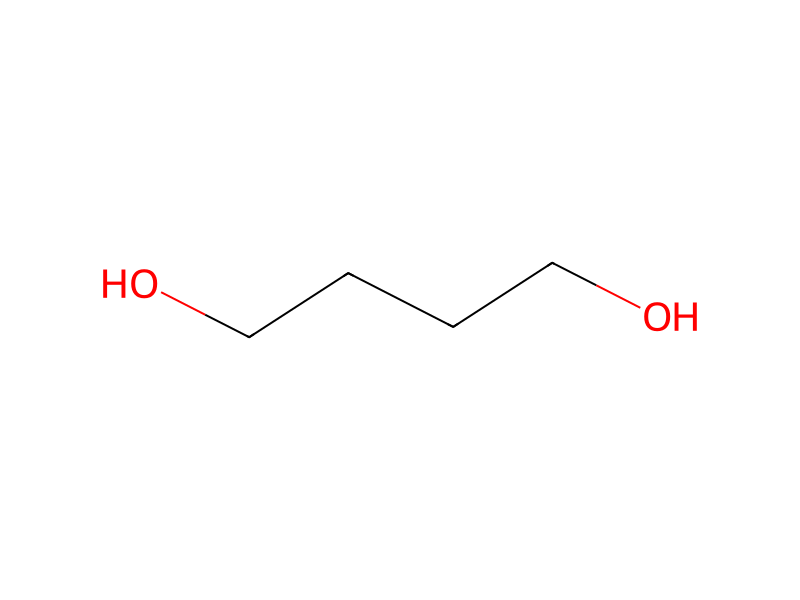
C(O)[CH2:2][CH2:3][CH2:4][OH:5].[CH2:7]([CH:9]1[O:11][CH2:10]1)Cl.[OH-:12].[Na+].C1(C)C=CC=CC=1>>[CH2:7]([O:5][CH2:4][CH:3]1[O:12][CH2:2]1)[CH:9]1[O:11][CH2:10]1Participants




Conditions
- Temperature
- 50 °C
Procedure
The solution of catalyst C is further used in the apparatus in which the distillation head is replaced with a reflux condenser. To the catalyst solution are added 90.12 g (1.0 mol) of 1,4-butanediol and then 160.7 ml (2.05 mol) of epichlorohydrin are added under N2 and with good stirring over 1 h. The reaction mixture is thereafter allowed to react for 3 h under reflux, then cooled to 50° C. To the solution are then added 16 g (0.2 mol) of a 50% aqueous solution of NaOH over 5 min, followed by the addition of 76 g (1.9 mol) of pulverised NaOH in increments over 45 min. The suspension is stirred for 30 minutes. The reaction mixture is filtered, washed with 100 mol of toluene and the phases are separated. The organic phase is dried over MgSO4, filtered, and the filtrate is freed from solvent on a rotary evaporator at a bath temperature of 70° C., giving 203.0 g (100% of theory) of colourless diglycidyl ether of 1,4-butanediol having the following properties: epoxy value: 8.78 eq/kg (89% of theory); total chlorine content: 3.6%; concentration of hydrolisable chlorine: 50 ppm.
Workup
- customis replaced with a reflux condenser
- customto react for 3 h
- temperatureunder reflux
- stirringThe suspension is stirred for 30 minutes
- filtrationThe reaction mixture is filtered
- customthe phases are separated
- dry with materialThe organic phase is dried over MgSO4
- filtrationfiltered
- customthe filtrate is freed from solvent on a rotary evaporator at a bath temperature of 70° C.
Sources & evidence
- ORD record
- ord-b30e50a10849426987659bd2ab4f0e6c
- Source dataset
- uspto-grants-1994_08
- Patent number
- US05342903
Reaction notes
Loading…