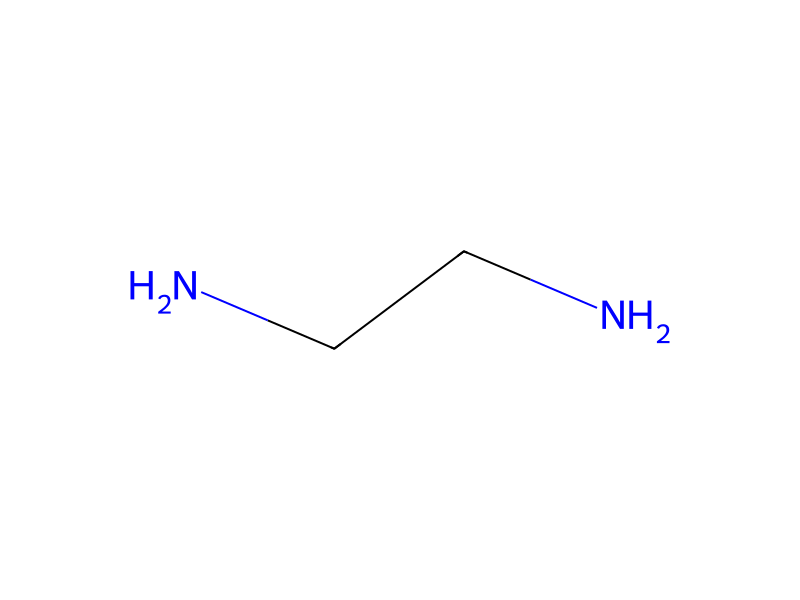
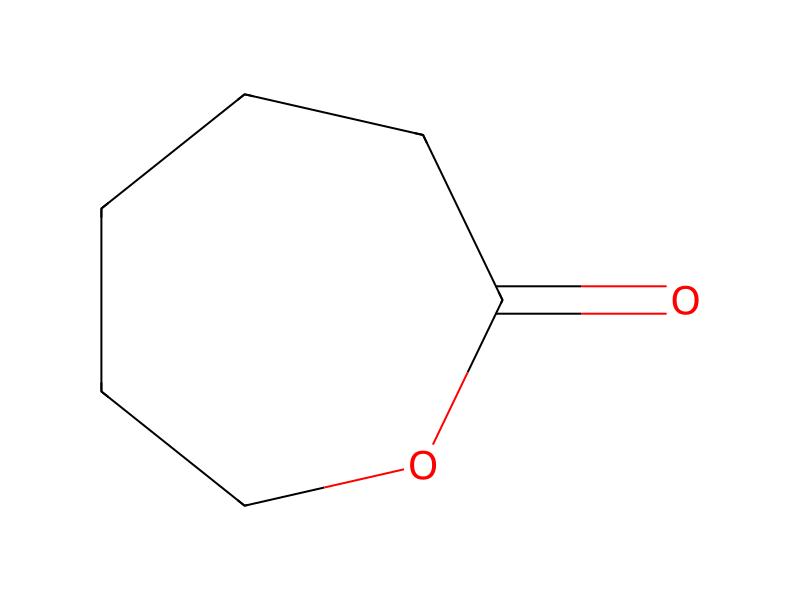
Ethylenediamine → N,N'-(Ethane-1,2-diyl)bis(6-hydroxyhexanamide)
Reaction equation

[CH2:1]([NH2:4])[CH2:2][NH2:3].[C:5]1(=[O:12])[O:11][CH2:10][CH2:9][CH2:8][CH2:7][CH2:6]1>O>[OH:11][CH2:10][CH2:9][CH2:8][CH2:7][CH2:6][C:5]([NH:3][CH2:2][CH2:1][NH:4][C:10]([CH2:9][CH2:8][CH2:7][CH2:6][CH2:5][OH:12])=[O:11])=[O:12]Participants
Reactant 2
Product 1

Reagents, catalysts & solvents 1

Conditions
- Temperature
- 20 °C
Procedure
C2C monomer is prepared by reacting 1.2 kg ethylene diamine (EDA) with 4.56 kg of ε-caprolactone under a nitrogen blanket in a stainless steel reactor equipped with an agitator and a cooling water jacket. An exothermic condensation reaction between the ε-caprolactone and the EDA occurs which causes the temperature to rise gradually to 80 degrees Celsius (° C.). A white deposit forms and the reactor contents solidify, at which point the stirring is stopped. The reactor contents are then cooled to 20° C. and are then allowed to rest for 15 hours. The reactor contents are then heated to 140° C. at which temperature the solidified reactor contents melt. The liquid product is then discharged from the reactor into a collecting tray. A nuclear magnetic resonance study of the resulting product shows that the molar concentration of C2C in the product exceeds 80 percent. The melting point of the C2C product is determined to be 140° C.
Workup
- customC2C monomer is prepared
- customequipped with an agitator
- customto rise gradually to 80 degrees Celsius
- temperatureThe reactor contents are then heated to 140° C. at which temperature the solidified reactor contents
- concentrationA nuclear magnetic resonance study of the resulting product shows that the molar concentration of C2C in the product
- customto be 140° C.
Sources & evidence
- ORD record
- ord-692b84a7ff674c88879af683d1068857
- Source dataset
- uspto-grants-2015_10
- Patent number
- US09150763B2
Reaction notes
Loading…