Benzene → Butylbenzene
Reaction equation

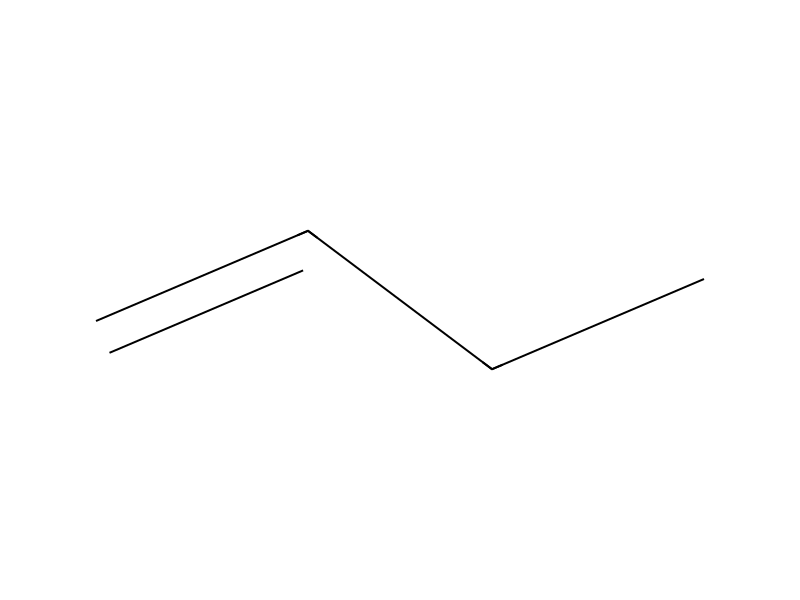
[CH2:1]=[CH:2][CH2:3][CH3:4].[CH:5]1[CH:10]=[CH:9][CH:8]=[CH:7][CH:6]=1>>[CH2:1]([C:5]1[CH:10]=[CH:9][CH:8]=[CH:7][CH:6]=1)[CH2:2][CH2:3][CH3:4].[CH:2]([C:5]1[CH:10]=[CH:9][CH:8]=[CH:7][CH:6]=1)([CH2:3][CH3:4])[CH3:1]Participants
4



Procedure
When benzene is alkylated with butenes, e.g., n-butene, to produce butylbenzene, e.g. sec-butylbenzene, the reaction may also take place under at least partially liquid phase conditions including a temperature of up to about 250° C., preferably up to about 150° C., e.g., from about 10° C. to about 125° C.; a pressure of about 25,000 kPa-a or less, e.g., from about 100 kPa-a to about 3,000 kPa-a; a weight hourly space velocity (WHSV) based on butenes alkylating agent of from about 0.1 hr−1 to about 250 hr−1, preferably from about 1 hr−1 to about 50 hr−1; and a ratio of benzene to butenes in the alkylation reactor of from about 0.5:1 to about 30:1 molar, more preferably from about 1:1 to about 10:1 molar.
Sources & evidence
- ORD record
- ord-0a29272ca5ad486ea1daa98b64af09df
- Source dataset
- uspto-grants-2015_10
- Patent number
- US09169173B2
Reaction notes
Loading…