Acryloyl chloride → HCID 18649788, compound
Reaction equation

[CH2:1]([NH:3][CH2:4][C@@H:5]([C@H:7]([C@H:9]([C@@H:11]([CH2:13][OH:14])[OH:12])[OH:10])[OH:8])[OH:6])[CH3:2].N([O-])=O.[Na+].[C:19](Cl)(=[O:22])[CH:20]=[CH2:21].[OH-].[K+]>O.C(Cl)Cl>[C:19]([N:3]([CH2:1][CH3:2])[CH2:4][C@@H:5]([C@H:7]([C@H:9]([C@@H:11]([CH2:13][OH:14])[OH:12])[OH:10])[OH:8])[OH:6])(=[O:22])[CH:20]=[CH2:21]Participants
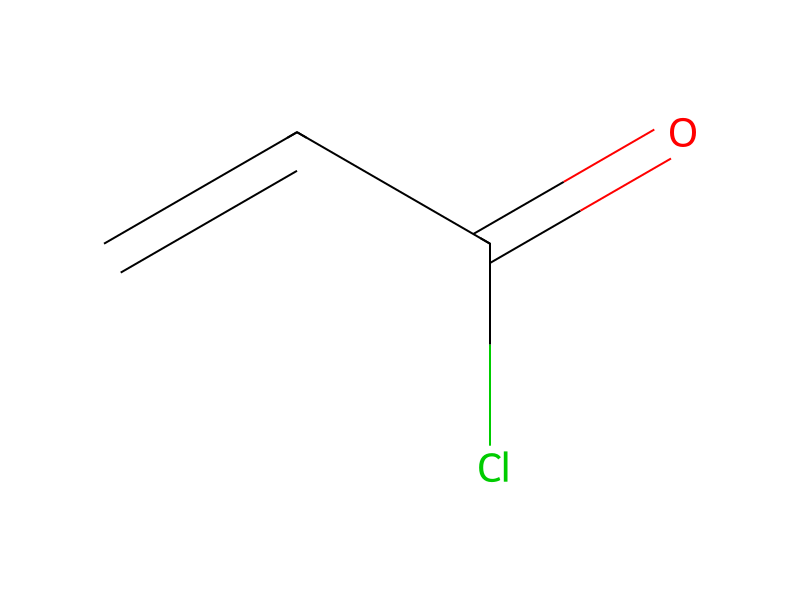






Procedure
The N-ethyl-1-amino-1-deoxy-D-galacitol (63 g) is mixed with about 300 ml of water and 1 g of sodium nitrite. Then 100-150 ml of methylene chloride are added, and the solution is cooled in an ice bath. Acryloyl chloride (10% molar excess over the amine) is mixed with the same volume of methylene chloride. Potassium hydroxide, equal to twice the molar amount of acryloyl chloride, is dissolved in water and cooled. To the well stirred two-phase reaction mixture, portions of acryloyl chloride and KOH solutions were added in such a way that the pH remained between 7.5-9.5 (as checked frequently by a narrow range pH paper). After the last additions of acryloyl chloride and KOH solutions, the reaction mixture was further stirred for about one hour (the pH was periodically checked and corrected, if necessary). The two phases were allowed to separate in a separating funnel and the lower organic phase was discarded. The aqueous phase was treated with charcoal and filtered. The filtrate was treated with a combination of ion exchangers either in solution or by passing the filtrate through columns packed with ion exchangers. Thus, to the stirred solution, portions of Amberlite IR-120,H+ and IRA-68 (free base) were added (pH being kept neutral or slightly acid) until the silver reaction for chloride was negative. The resin was then removed, the filtrate treated with activated charcoal and the solution poured into crystallization dishes. Alternatively, the monomer solution was passed through 600 ml of IR-120 and 600 ml of IRA-68, preferentially packed in more than two columns. The solution passed always first through the cationic ion exchanger. A small quantity (several hundred mg) of p-methoxy phenol or sodium nitrite (polymerization inhibitors) were added to the monomer solution. The water evaporated within 1-2 weeks. The monomer appeared as a white solid. The yield was 72%. The monomer was recrystallized from ethanol-acetone, m.p. 80°-84° C. (polymerization).
Workup
- temperaturethe solution is cooled in an ice bath
- temperaturecooled
- additionwere added in such a way that the pH
- customto separate in a separating funnel
- additionThe aqueous phase was treated with charcoal
- filtrationfiltered
- additionThe filtrate was treated with a combination of ion exchangers either in solution
- additionThus, to the stirred solution, portions of Amberlite IR-120,H+ and IRA-68 (free base) were added (
- customslightly acid) until the silver reaction for chloride
- customThe resin was then removed
- additionthe filtrate treated with activated charcoal
- additionthe solution poured into crystallization dishes
- additionA small quantity (several hundred mg) of p-methoxy phenol or sodium nitrite (polymerization inhibitors) were added to the monomer solution
- customThe water evaporated within 1-2 weeks
- customThe monomer was recrystallized from ethanol-acetone, m.p. 80°-84° C. (polymerization)
Sources & evidence
- ORD record
- ord-7b088d2d12334ba9b895ede967d7a914
- Source dataset
- uspto-grants-1995_08
- Patent number
- US05438092
Reaction notes
Loading…