Sulfuryl chloride → HCID 19918030, compound
Reaction equation

[Br:1][C:2]1[CH:3]=[C:4]([CH:9]=[C:10]([OH:13])[C:11]=1[OH:12])[C:5]([O:7][CH3:8])=[O:6].S(Cl)([Cl:17])(=O)=O>C(O)(=O)C>[Br:1][C:2]1[C:11]([OH:12])=[C:10]([OH:13])[C:9]([Cl:17])=[C:4]([CH:3]=1)[C:5]([O:7][CH3:8])=[O:6]Participants
Reactant 2
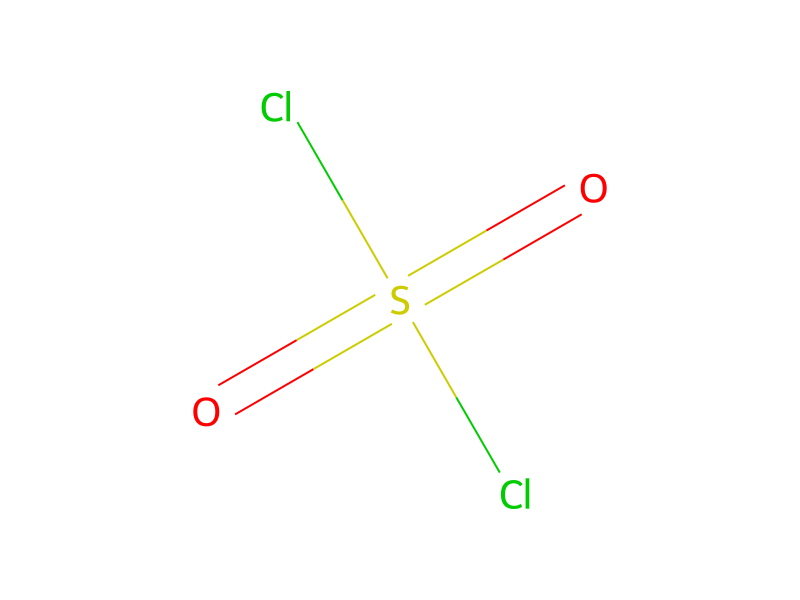

Product 1

Reagents, catalysts & solvents 1

Conditions
- Temperature
- 55 °C
Procedure
A mixture of 9.6 g (40 mmol) of methyl 3-bromo-4,5-dihydroxybenzoate, 8.4 g (62 mmol) of sulphuryl chloride and 400 ml of glacial acetic acid is stirred at 55° C. for 60 hours and subsequently concentrated at 40° C. in a vacuum. The residue is dissolved in 200 ml of methanol and saturated with hydrogen chloride. After standing at room temperature for 5 hours the solvent is distilled off in a vacuum. The residual material is treated with about 100 ml of dichloromethane/ethyl acetate/petroleum ether (1:1:1 v/v) and filtered. The filtrate is concentrated and the residue is crystallized and recrystallized from diethyl ether/petroleum ether. There are obtained 3.4 g of methyl 5-bromo-2-chloro-3,4-dihydroxybenzoate as white crystals of melting point 103° C.
Workup
- concentrationsubsequently concentrated at 40° C. in a vacuum
- dissolutionThe residue is dissolved in 200 ml of methanol and saturated with hydrogen chloride
- waitAfter standing at room temperature for 5 hours
- distillationthe solvent is distilled off in a vacuum
- additionThe residual material is treated with about 100 ml of dichloromethane/ethyl acetate/petroleum ether (1:1:1 v/v)
- filtrationfiltered
- concentrationThe filtrate is concentrated
- customthe residue is crystallized
- customrecrystallized from diethyl ether/petroleum ether
Sources & evidence
- ORD record
- ord-9773b5a7b25c46f880850c33260a5154
- Source dataset
- uspto-grants-1995_08
- Patent number
- US05438052
Reaction notes
Loading…