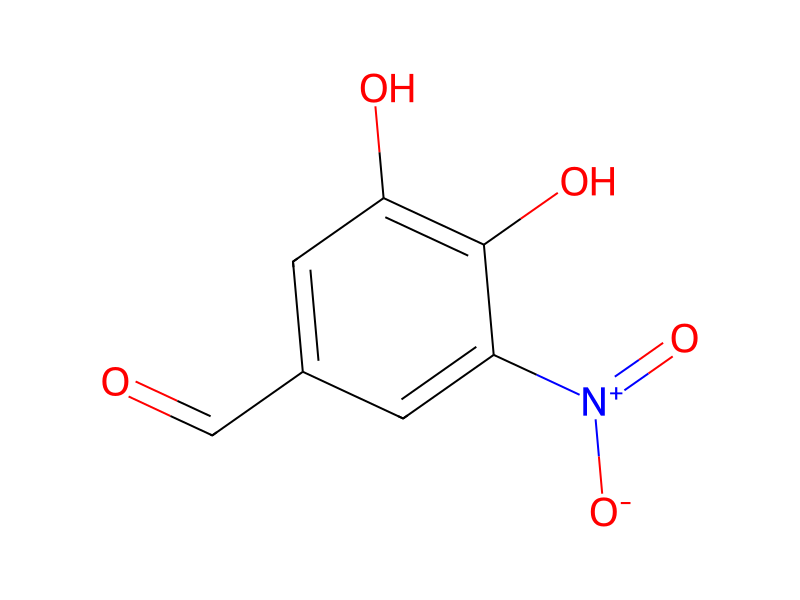
3,4-Dihydroxy-5-nitrobenzaldehyde → Neopentyl 2-cyano-3-(3,4-dihydroxy-5-nitrophenyl)acrylate
Reaction equation

[OH:1][C:2]1[CH:3]=[C:4]([CH:7]=[C:8]([N+:11]([O-:13])=[O:12])[C:9]=1[OH:10])[CH:5]=O.[C:14]([CH2:16][C:17]([O:19][CH2:20][C:21]([CH3:24])([CH3:23])[CH3:22])=[O:18])#[N:15]>>[C:14]([C:16](=[CH:5][C:4]1[CH:7]=[C:8]([N+:11]([O-:13])=[O:12])[C:9]([OH:10])=[C:2]([OH:1])[CH:3]=1)[C:17]([O:19][CH2:20][C:21]([CH3:24])([CH3:23])[CH3:22])=[O:18])#[N:15]Participants
3


Procedure
The procedure described in Example 4 was repeated using 3,4-dihydroxy-5-nitrobenzaldehyde and neopentyl cyanoacetate. Yield 67%, m.p. 173°-179° C.
Sources & evidence
- ORD record
- ord-ed448e5aa6b540b1876a5c38176d5cd4
- Source dataset
- uspto-grants-1995_08
- Patent number
- US05446194
Reaction notes
Loading…