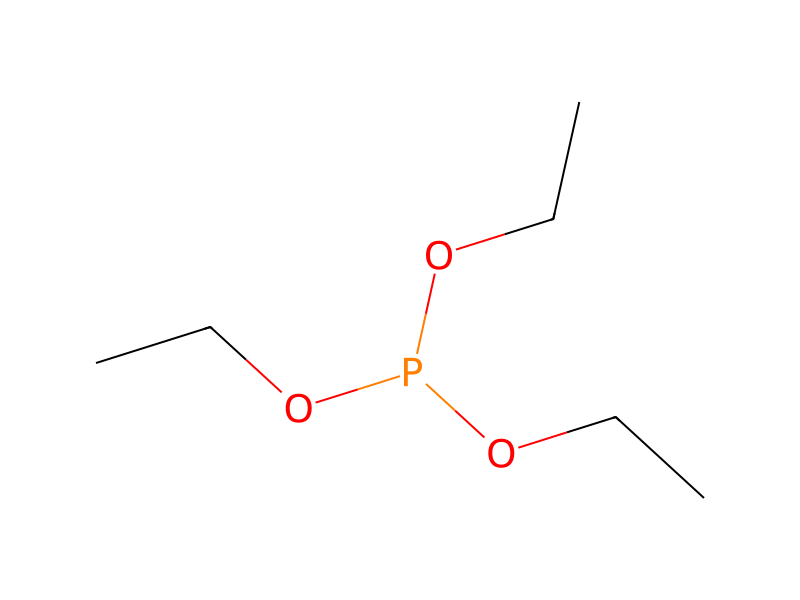
Triethyl phosphite → Phosphinecarboxylic acid, diethoxy-, 4-chlorophenyl ester, oxide
Reaction equation

C([O:3][P:4]([O:8][CH2:9][CH3:10])[O:5][CH2:6][CH3:7])C.Cl[C:12]([O:14][C:15]1[CH:20]=[CH:19][C:18]([Cl:21])=[CH:17][CH:16]=1)=[O:13]>>[Cl:21][C:18]1[CH:19]=[CH:20][C:15]([O:14][C:12]([P:4](=[O:3])([O:5][CH2:6][CH3:7])[O:8][CH2:9][CH3:10])=[O:13])=[CH:16][CH:17]=1Participants
3


Procedure
From 20 g (0.12 mole) of triethylphosphite and 19.1 g (0.10 mole) of 4-chlorophenyl chloroformate (prepared according to M. J. Zabik and R. D. Scheutz J. Org. Chem. 32 (1967) 300). (125°, 2 hours) yield 26.3 g (90%). B.P.0.01 153°-6°, nD21 1.4980. Analysis for C11H14Cl O5P. Found (calculated): C 44.85 (45.14), H 4.83 (4.82), P 10.54 (10.59). NMR (CDCl3)δ: 1.45 (t, CH3), 4.17-4.63 (CH2), 7.03-7.48 (C6H4).
Workup
- custom(125°, 2 hours) yield 26.3 g (90%)
- customB.P.0.01 153°-6°
Sources & evidence
- ORD record
- ord-33d5adb0a3c8448db489b094db9cf046
- Source dataset
- uspto-grants-1983_02
- Patent number
- US04372894
Reaction notes
Loading…