1,1,3-Trichlorobut-1-ene → Ethyl 5,5-dichloro-3-methyl-2-propan-2-ylpent-4-enoate
Reaction equation

[Cl:1][C:2]([Cl:7])=CC(Cl)C.C[Si](C)(C)[O:10][C:11]([O:16][CH2:17][CH3:18])=[CH:12][CH:13]([CH3:15])[CH3:14].[CH2:21](O)[C@H:22](O)[C@H:23]1OC(=O)C(O)=C1O>C(Cl)Cl.[Cl-].[Zn+2].[Cl-]>[Cl:1][C:2]([Cl:7])=[CH:14][CH:13]([CH3:15])[CH:12]([CH:22]([CH3:23])[CH3:21])[C:11]([O:16][CH2:17][CH3:18])=[O:10]Participants
Reactant 3


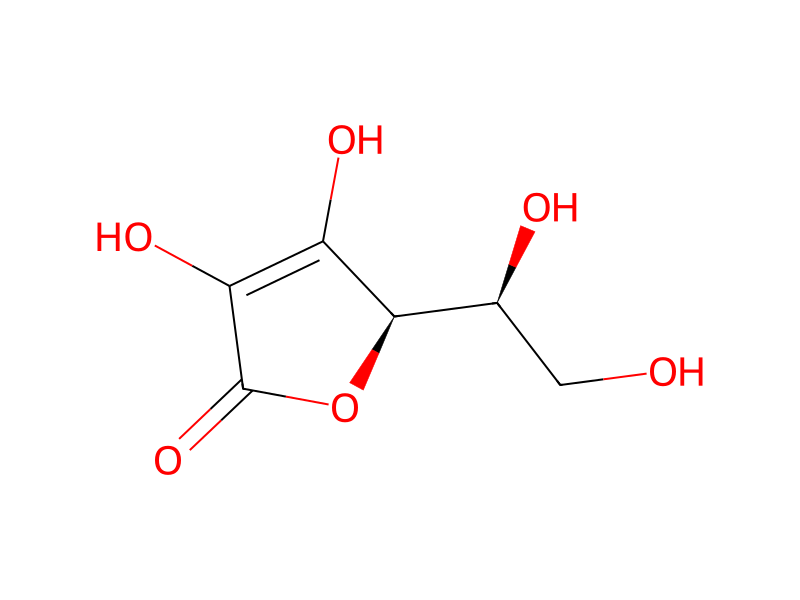
Product 1

Reagents, catalysts & solvents 2


Procedure
A 250 ml R.B. flask was equipped with a magnetic stirrer, reflux condenser, and N2 inlet tube. The glassware was dried thoroughly then charged with 23.91 g (0.15 mol) of 1,1,3-trichloro-1-butene, 30.36 g (0.15 mol) of 1-trimethylsilyloxy-1-ethoxy-3-methyl-1-butene, 100 ml of methylene chloride, and ~0.50 g of anhydrous zinc chloride. The reaction mixture was stirred at room temperature and monitored by infrared. The gradual disappearance of the ketene acetal C=C peak at 1675 cm-1 and the appearance of an ester C=O peak at 1720 cm-1 was observed. The reaction mixture after 67 hours showed only a c=O peak at 1720 cm-1 and no 1675 cm-1, and was diluted with 150 ml of methylene chloride, washed with 5×100 ml of 5% sodium bicarbonate solution, then 2×with 50 ml of water. The methylene chloride was dried (MgSO4), stripped, and the residue vacuum distilled through a vigreux column to give 23.41 g (62% yield) of the desired product, b.p. 64°-68° C./0.30 mm.
Workup
- customflask was equipped with a magnetic stirrer
- temperaturereflux condenser, and N2 inlet tube
- customThe glassware was dried thoroughly
- washwashed with 5×100 ml of 5% sodium bicarbonate solution
- dry with materialThe methylene chloride was dried (MgSO4)
- distillationthe residue vacuum distilled through a vigreux column
Sources & evidence
- ORD record
- ord-66d0b719f09f42e6837ddcce9c4c0f55
- Source dataset
- uspto-grants-1982_07
- Patent number
- US04338326
Reaction notes
Loading…