Benzene → Cumene
Reaction equation

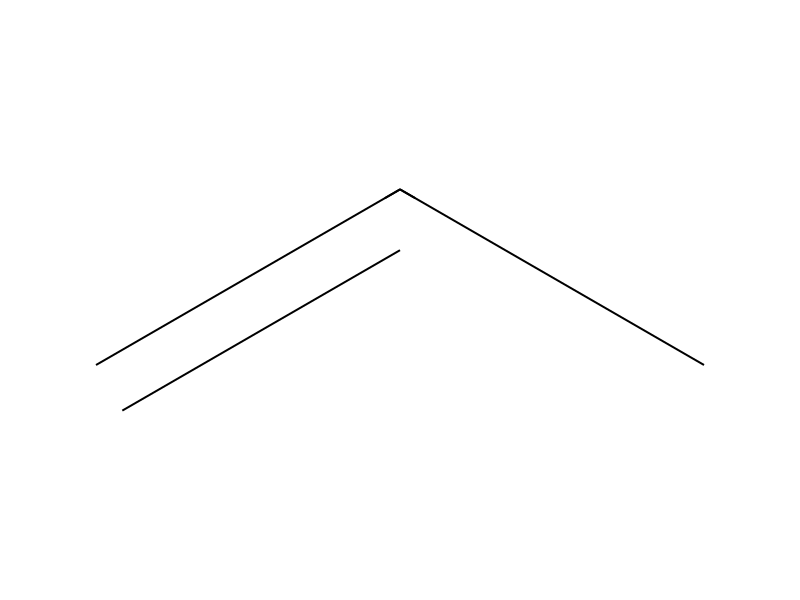
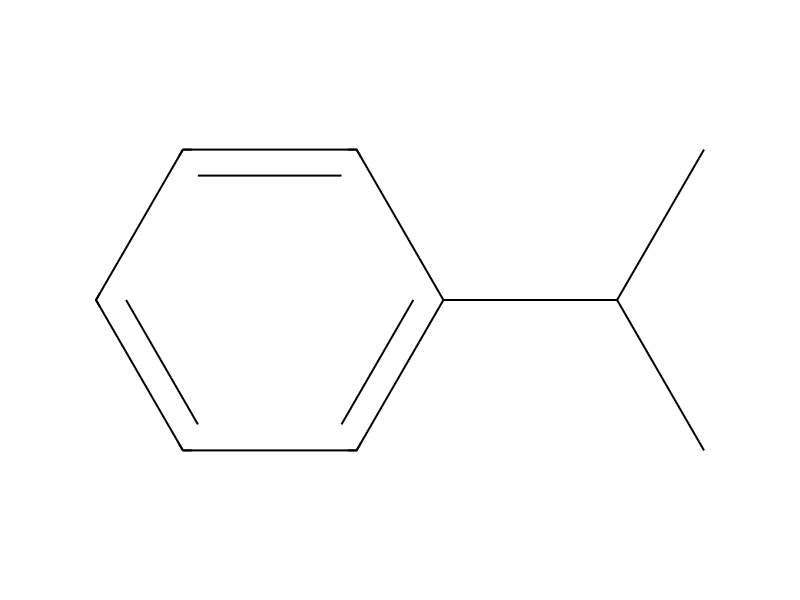
[CH2:1]=[CH:2][CH3:3].[CH:4]1[CH:9]=[CH:8][CH:7]=[CH:6][CH:5]=1>>[C:4]1([CH:2]([CH3:3])[CH3:1])[CH:9]=[CH:8][CH:7]=[CH:6][CH:5]=1Participants
Reactant 2

Product 1
Procedure
In the reactor, the reaction of isopropanol with benzene to form cumene, the dehydration reaction which proceeds simultaneously and the reaction of the propene formed or added with benzene to give cumene, i.e. the alkylation reactions, are carried out at a reaction temperature of from 100 to 300° C. The reactor preferably has a temperature gradient which is set so that the reaction mixture in the vicinity of the reactor inlet has a temperature of from 150 to 200° C. and that in the vicinity of the reactor outlet has a temperature of from 250 to 300° C. The reactions are preferably carried out at a pressure of from 10 to 100 bar abs, preferably from 20 to 60 bar abs. Propene is generated in the reactor by the simultaneous isopropanol dehydration. The liquid phase has to be brought into intimate contact with the catalyst so that the alkylation reactions can proceed. This can be ensured, for example when using a trickle-bed reactor, by using high linear velocities of the liquid phases in the reactor, preferably greater than 30 m/h.
Workup
- customthe dehydration reaction which
- customformed
Sources & evidence
- ORD record
- ord-8ea8be924bb741e58ca02ae6751cc924
- Source dataset
- uspto-grants-2005_01
- Patent number
- US06841704B2
Reaction notes
Loading…