Phosphoric Acid → Calcium hydrogen phosphate
Reaction equation
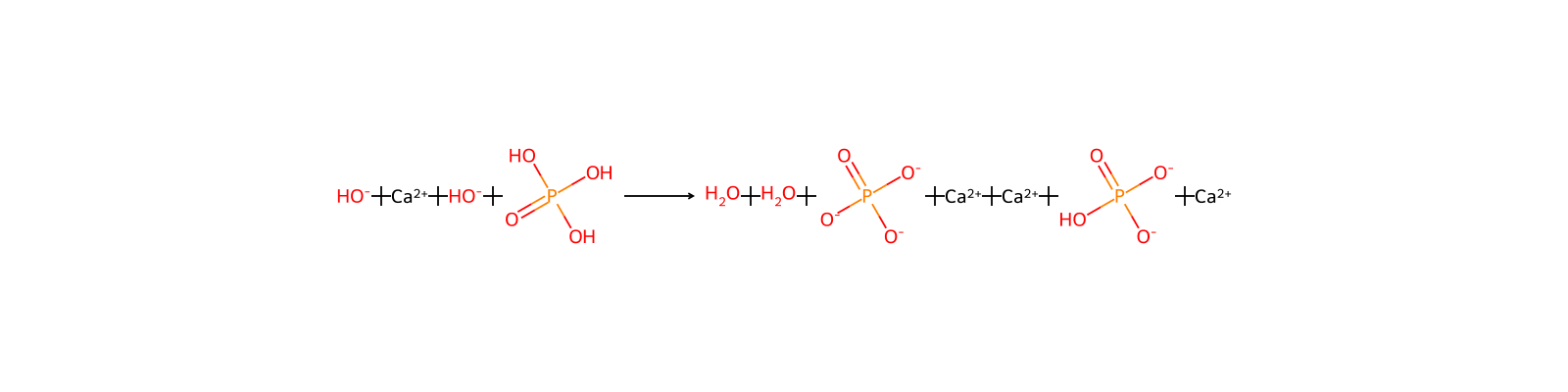
[OH-:1].[Ca+2:2].[OH-].[P:4](=[O:8])([OH:7])([OH:6])[OH:5]>>[OH2:5].[OH2:1].[P:4]([O-:8])([O-:7])([O-:6])=[O:5].[Ca+2:2].[Ca+2:2].[P:4]([OH:8])([O-:7])([O-:6])=[O:5].[Ca+2:2]Participants


Procedure
Samples of dicalcium phosphate dihydrate were prepared according to general procedures described in aforementioned Michel's U.S. Pat. No. 4,472,365. In particular, the process involved the following four steps: (1) reacting a slaked lime slurry with phosphoric acid to form a monocalcium phosphate solution; (2) adding magnesium oxide (in the form of Mg(OH)2) into the solution and adding additional slaked lime slurry in an amount sufficient to form a dicalcium phosphate dihydrate slurry having a pH ranging from about 5.4 to about 5.9; (3) adding into the dicalcium phosphate dihydrate slurry an amount of pyrophosphoric acid sufficient to reduce the pH of the slurry to from about 4.9 to about 5.5, provided, however, that the minimum amount of pyrophosphoric acid so added was at least 0.1% by weight of dicalcium phosphate dihydrate; and (4) separating the dicalcium phosphate dihydrate from the slurry in a conventional manner.
Sources & evidence
- ORD record
- ord-5c23613ba9f74e6891b39d6010ea5f09
- Source dataset
- uspto-grants-1989_05
- Patent number
- US04828823
Reaction notes
Loading…