L-Lysine → HCID 178462329, compound
Reaction equation

Br[C@:2]1([C@H:10]([CH3:12])[OH:11])[O:7][C:5](=[O:6])[C:4]([OH:8])=[C:3]1[O-:9].[NH2:13][C@H:14]([C:20]([OH:22])=[O:21])[CH2:15][CH2:16][CH2:17][CH2:18][NH2:19]>N1C=CC=CC=1>[NH2:13][C@H:14]([C:20]([OH:22])=[O:21])[CH2:15][CH2:16][CH2:17][CH2:18][NH2:19].[O:6]=[C:5]1[O:7][C@H:2]([C@H:10]([CH3:12])[OH:11])[C:3]([O-:9])=[C:4]1[OH:8]Participants
4
Reactant 2
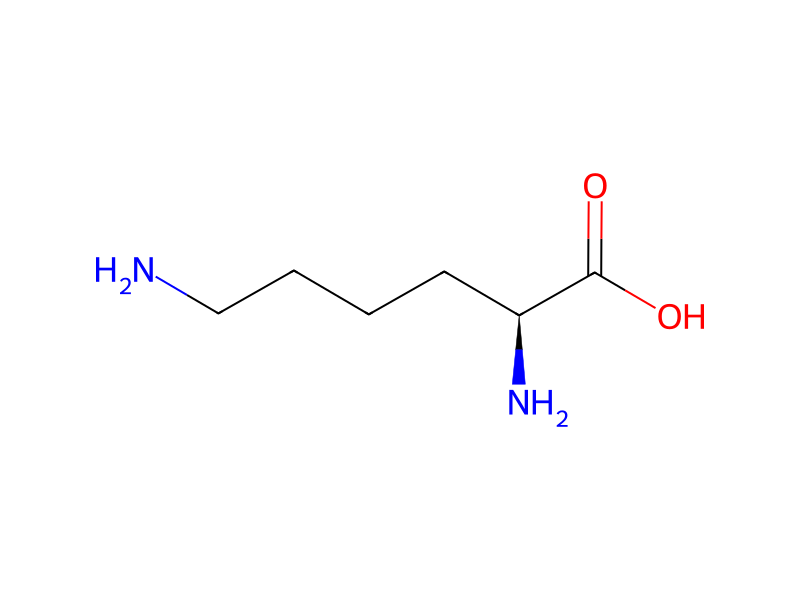

Product 1

Reagents, catalysts & solvents 1

Procedure
6-Deoxybromo ascorbate (8 mmoles) is reacted with lysine (10 mmoles) in dry pyridine to give the desired product. The α-amino group of lysine is protected so that the ε-group is available for reaction. The reaction is carried out overnight. Pyridine is removed under reduce pressure, poured in ice, extracted with ether, washed with water, dried over sodium sulfate. Ether is removed and crystallized from ethanol.
Sources & evidence
- ORD record
- ord-8ba422fb9f804b9f993b39bebd21d3b1
- Source dataset
- uspto-grants-2007_06
- Patent number
- US07230124B2
Reaction notes
Loading…